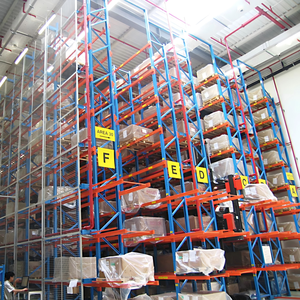
Product Showcase
Semi-Automated & Heavy-Duty Warehouse Racking Systems
Engineered for maximum spatial volumetric efficiency, fast inventory turnover, and heavy load capacity across high-bay distribution logistics hubs.
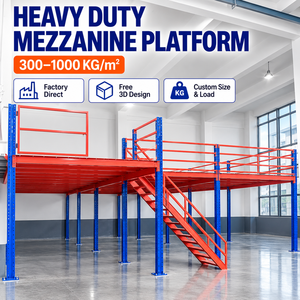
Heavy Duty Steel Mezzanine Floor Rack System For Warehouse Storage
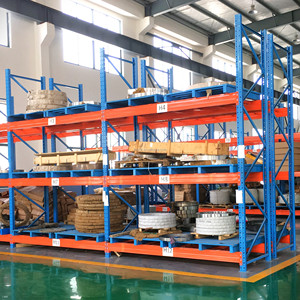
OEM Factory Wholesale Warehouse Racking Industrial Racks Customized Pallet Racking System Heavy Duty Steel Racks For Storage
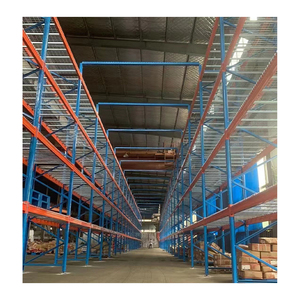
Versatile Storage System Heavy Duty Warehouse Racks Storage Pallet Racking Steel Rack Heavy Duty Pallet Racking By Custom
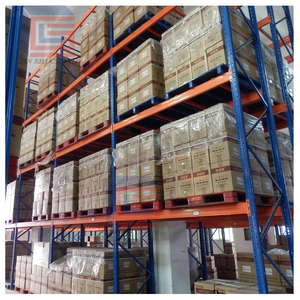
Industrial Heavy Duty Steel Pallet Rack Warehouse Shelving System for Storage, Distribution Center and Factory Use
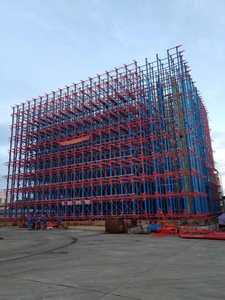
Pallet Shuttle Rack Is a Deep lane Storage and Retrieval System Which Helps You to Optimise the Storage Capacity
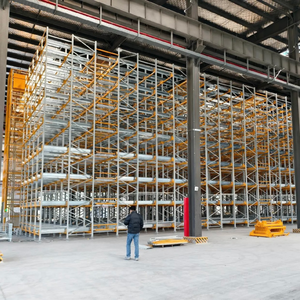
Heavy-Duty Four-Way Shuttle Storage System Automated Pallet Racks for Industrial Warehousing & Intralogistics
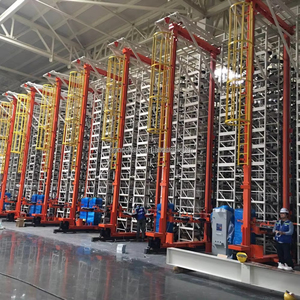
ASRS Shuttles Pallet Racking System Smart Warehouse Forklift Automation with Radio Control Cargo & Storage Equipment
Strategic Sourcing Insights
The Evolution of High-Density Storage: Sourcing Semi-Automated Pallet Racking from China
In modern intralogistics, supply chain directors and warehouse managers are under escalating pressure to maximize cubic volumetric utilization while sharply controlling CapEx (Capital Expenditure). Standard drive-in racking systems, while dense, introduce high risks of structural forklift damage, slow inventory retrieval, and rigid LIFO (Last-In, First-Out) constraints. Conversely, fully automated AS/RS (Automated Storage and Retrieval Systems) require millions of dollars in upfront investment and prolonged commissioning timelines.
Semi-automated pallet racking—specifically Radio Shuttle Racking Systems and 4-Way Electric Shuttle Racks—bridges this operational gap. By embedding self-propelled, radio-controlled shuttles inside deep storage channels, operations eliminate the need for forklifts to enter storage aisles. As a premier China semi-automated pallet racking manufacturer, SolidFort Storage Equipment provides factory-direct engineering that optimizes warehouse footprints across FMCG, cold storage, pharmaceutical, and high-scale manufacturing sectors.
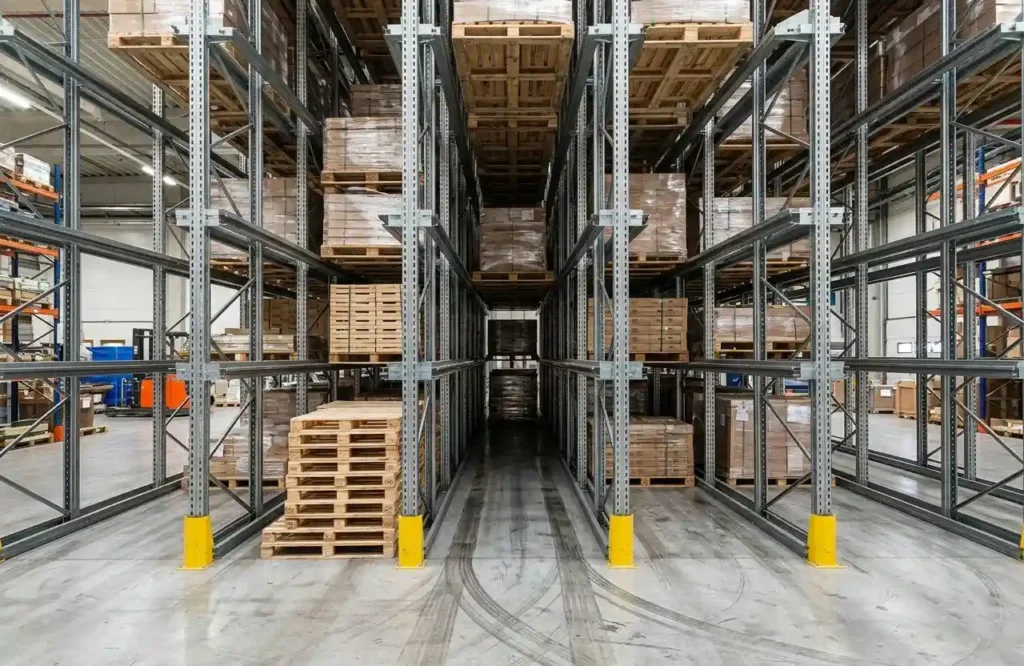
Engineering Excellence
Architectural Integrity & Technical Specifications
Every semi-automated shuttle racking structure engineered by SolidFort undergoes structural finite element analysis (FEA) to withstand extreme dynamic loading, seismic accelerations, and heavy continuous cycle usage.
High-Tensile Q355B Steel Profiles
Uprights and guide rails are roll-formed from cold-rolled Q355B (equivalent to SS50) structural steel. This guarantees higher yield strength and minimal frame deflection under dynamic loads up to 3,000 kg per pallet position.
Multi-Sensor Safety & Laser Positioning
Integrated radio shuttles feature dual laser distance sensors, anti-collision obstacles detectors, emergency stop bumpers, and automatic pallet-spacing controls to ensure ZERO pallet-to-pallet impact during high-speed travel.
Cold Storage & Thermal Protection
Engineered to operate reliably in sub-zero environments down to -30°C. Equipped with military-grade lithium iron phosphate (LiFePO4) battery packs featuring internal heating elements and rapid-charge docks.
Decision Matrix
Semi-Automated Pallet Shuttle vs. Traditional Storage Systems
Compare spatial efficiency, inventory management flexibility, forklift risk reduction, and CapEx recovery timelines before choosing your system architecture.
| Storage Racking Architecture | Selectivity | Storage Density | Operational Flow | Forklift Collision Risk | CapEx per Pallet Position | Estimated ROI Horizon |
|---|---|---|---|---|---|---|
| Semi-Automated Radio Shuttle | Medium (Channel Level) | Very High (>85%) | FIFO or LIFO Selectable | Near Zero | USD $110 - $220 | 12 – 18 Months |
| Selective Pallet Racking | 100% Direct Access | Standard (40 - 50%) | FIFO / LIFO Flexible | Moderate | USD $50 - $95 | Baseline |
| Drive-In Racking System | Low (Lane Level) | High (65 - 75%) | Strict LIFO Only | High (Forklift Enters Frame) | USD $90 - $150 | 18 – 24 Months |
| Fully Automated AS/RS (Crane) | 100% Automated | Maximum (>90%) | WMS-Programmed FIFO/LIFO | Zero (Fully Autonomous) | USD $500 - $1,200+ | 36 – 60 Months |
Future Procurement Trends
Intralogistics Automation Trends: The 2026–2030 Horizon
As global supply chains navigate labor scarcity, rising warehouse real estate lease costs, and ESG sustainability directives, semi-automated pallet racking systems are rapidly evolving. Top China semi-automated pallet racking manufacturers are leading the integration of next-generation intralogistics tech:
1. AGV & AMR Integration with Shuttle Rails
Modern semi-automated systems are shifting from manual forklift handling to automated guided vehicles (AGVs) and autonomous mobile robots (AMRs). Shuttles and AMRs exchange handshake signals via industrial Wi-Fi or 5G private networks, achieving fully touchless pallet loading at fraction of AS/RS costs.
2. WMS/WCS API Interoperability
Next-gen handheld controllers and shuttle fleets now embed RESTful APIs and Modbus TCP protocols. This allows warehouse managers to monitor shuttle battery health, pallet location indexing, cycle counts, and predictive maintenance alerts directly inside enterprise ERP systems like SAP, Oracle, or Manhattan WMS.
3. Modular Scalability & Brownfield Retrofits
Unlike rigid automated cranes that require specialized building foundations, semi-automated radio shuttle racking can be installed on standard concrete warehouse slabs (minimum 150mm thickness, C25/30 concrete grade). Companies can start with 2 shuttle units and scale their shuttle fleet seamlessly as pallet throughput grows.
4. Sustainable Green Steel & Eco Coatings
SolidFort utilizes zero-VOC electrostatic powder coating lines and recyclable high-tensile steel alloys, assisting global buyers in achieving LEED certified warehouse supply chain compliance while prolonging corrosion resistance beyond 15 years.
Why Partner With SolidFort
Direct Factory Manufacturing & Global Compliance Standards
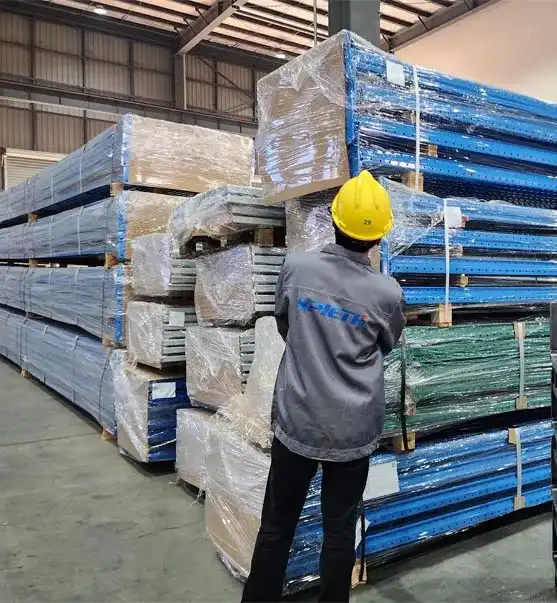
SolidFort Storage Equipment Co., Ltd. operates a state-of-the-art 30,000㎡ manufacturing facility in Tongan District, Xiamen, China. For over a decade, we have eliminated intermediate trading markups by supplying global logistics contractors, racking distributors, and enterprise brand facilities directly.
- Global Standard Compliance: Fully designed and verified under Australian Standard AS4084:2012 / AS4084:2023, American RMI (ANSI MH16.1), European FEM 10.2.02, and ISO 9001 quality management systems.
- Precision Roll-Forming Lines: Continuous automated cold roll-forming machines maintain structural profile tolerances within ±0.5mm, ensuring frictionless shuttle rail travel and smooth carrier docking.
- Free CAD Engineering & Simulation: Every inquiry receives a dedicated engineering evaluation—including structural load calculation plaques, 3D CAD facility layouts, and seismic zone anchors specification drawings.
Frequently Asked Questions
Semi-Automated Pallet Racking Procurement FAQ
Technical guidance directly from SolidFort senior structural engineers regarding cost, installation safety, floor loading, and operational setup.
What does semi-automated pallet racking cost per pallet position?
The cost of semi-automated radio shuttle racking typically ranges between USD $110 and USD $250 per pallet position. This cost variation depends on total storage height, dynamic load rating (e.g., 1,000 kg vs 2,000 kg per pallet), the total number of radio shuttle cars required for your throughput speed, and surface finishes (e.g., standard powder coat vs hot-dip galvanizing for cold storage applications).
Do pallet racks need to be anchored to the floor?
Yes. Under ANSI/RMI MH16.1, AS4084, and European FEM structural codes, every vertical rack column base plate must be anchored securely to the concrete slab using certified expansion or chemical anchor bolts. Proper anchoring resists overturning forces during loading cycles, mitigates seismic displacements, and maintains rack plumbness following minor impact bumps.
How is the load capacity of pallet racking calculated?
Pallet rack load capacity is calculated based on two critical parameters: Beam Pair Capacity (the maximum uniformly distributed load carried across a pair of horizontal beams) and Upright Frame Capacity (which decreases as the vertical distance between beam levels increases). Engineers utilize Finite Element Analysis (FEA) software to simulate maximum total rack bay loads and issue certified Load Application and Rack Configuration (LARC) plaques.
What is the standard size of a pallet rack?
For common 40" x 48" GMA (US) pallets, standard upright frame depth is 42 inches, allowing a 3-inch pallet overhang front and back. Standard beam lengths are 96 inches (for 2 pallets) or 144 inches (for 3 pallets). For Euro pallets (1200 x 800 mm or 1200 x 1000 mm), frame depths are tailored to 1100 mm with beam lengths designed around specific clearance margins.
How often should semi-automated racking and shuttles be inspected?
Formal structural safety inspections should be conducted by a certified inspector at least once every 12 months. In addition, internal facility personnel should perform weekly visual checks for twisted upright columns, damaged guide rails, missing beam safety locking pins, and shuttle optical sensor cleanliness.
What is SolidFort's manufacturing lead time and shipping terms?
Standard semi-automated racking systems ship within 10 to 15 business days from order confirmation. Large-scale engineered project designs typically require 25 to 30 days. We support flexible international trade terms including FOB (Xiamen Port), CIF, CFR, and door-to-door DDP (Delivered Duty Paid) with comprehensive container loading optimization plans.
Which international safety standards do SolidFort racking systems comply with?
SolidFort racking structures are engineered in strict compliance with Australian Standard AS4084:2012 / AS4084:2023, American Rack Manufacturers Institute RMI (ANSI MH16.1), European FEM 10.2.02, and ISO 9001:2015 quality management procedures, with CE certifications provided upon request.
How long does the radio shuttle battery last per charge cycle?
SolidFort industrial radio shuttles utilize high-performance LiFePO4 lithium batteries providing 8 to 10 hours of continuous operational runtime on a single 3-hour fast charge. Shuttles are supplied with dual hot-swappable battery packs to enable 24/7 continuous warehouse operations.
Optimize Your Warehouse Volumetric Storage Today
Consult with SolidFort senior structural engineers to receive a free CAD warehouse design layout, accurate weight capacity calculations, and factory-direct quotation within 24 hours.