Engineered Warehouse Storage Racking Systems
Explore our certified heavy-duty single-row, automated shuttle, mobile, and specialized pallet rack solutions manufactured in our 30,000㎡ Xiamen production facility.
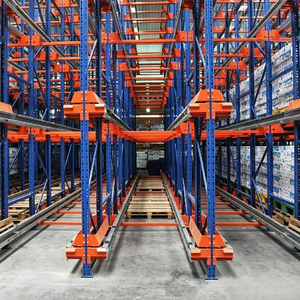
Radio Shuttle Pallet Racking Fully Automated Single-Aisle Access
Maximizes floor space utilization via heavy-duty radio shuttle carts running deep-lane single-aisle loading channels.
Send an Inquiry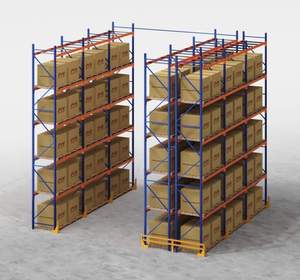
Conventional Single Row Pallet Racking Structural System
Provides 100% immediate selectivity for every pallet position. Perfect for multi-SKU fulfillment centers and high-turnover logistics.
Send an Inquiry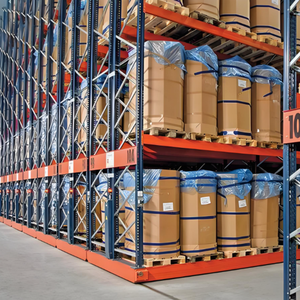
Mobile Pallet Racking System with Single Access Aisle
Motorized mobile bases shift sideways to open a single operational aisle on demand, doubling physical storage density in cold stores.
Send an Inquiry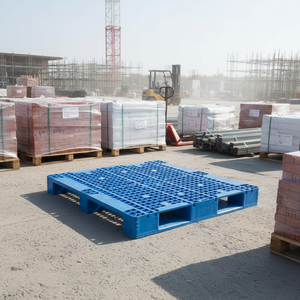
1414 JINDU Steel-Reinforced Single Faced Pallet Racking
Engineered with internal structural steel cores and 3-skid runners for ultimate frame stability under extreme 4-way forklift handling.
Send an Inquiry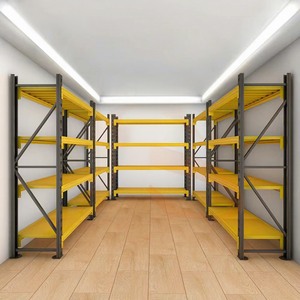
Extra Layer 1200*D400 Industrial Warehouse Rack Shelving
Modular heavy-duty industrial shelving with reinforced step beams tailored for combined manual order picking and palletized stock.
Send an Inquiry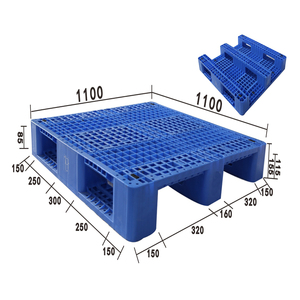
Reinforced 4-Way Steel Cores Pallet Racking System
Designed with integrated steel core reinforcements for distortion-free dynamic racking loads in automated conveyor integration.
Send an Inquiry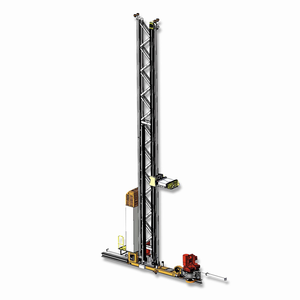
Pteris Miniload Single Column Automated ASRS Racking
High-speed robotic stacker crane system optimized for single-column racking arrays, delivering ultra-precise automated tote and pallet retrieval.
Send an Inquiry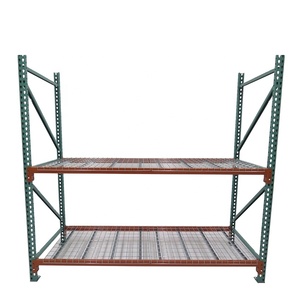
Heavy Duty CE Certified US Teardrop Industrial Pallet Racks
Interchangeable teardrop hole pattern racking engineered to RMI specifications with automatic safety locks for North American supply chains.
Send an InquirySingle Row Pallet Racking Engineering: Architectural Whitepaper
Single Row Pallet Racking—frequently termed selective single-entry pallet racking—remains the fundamental structural backbone of contemporary industrial logistics, high-throughput distribution centers (DCs), and automated fulfillment hubs. Unlike back-to-back double-row configurations or block-density storage (such as drive-in or push-back systems), single row racking configurations position a individual rack structure against facility perimeter walls or in standalone single-aisle operational zones to guarantee direct, unhindered access to every single pallet position (100% selectivity).
From a structural engineering perspective, designing single row pallet racking requires specialized calculations regarding structural slenderness, lateral displacement, and anchoring moment arms. Because single rows lack the horizontal inter-row tie stabilization inherent in back-to-back frame tying, their engineering design relies on optimized column profile metallurgy, rigid beam-to-column connector engagement, and precise baseplate anchor bolt tension calculations under both static payload and dynamic forklift impact stresses.
Optimal Selectivity Profile
Eliminates pallet honeycombing completely. Enables instantaneous stock location, ideal for operations handling high SKU counts with FIFO (First-In, First-Out) inventory rotation.
Cold-Rolled Steel Profiling
Manufactured from high-tensile Q235B and Q355B structural cold-rolled steel. Upright profiles feature continuous cold-formed ribbon geometry for maximum axial strength.
Seismic & Impact Safety
Calculated in strict compliance with ANSI/RMI MH16.1 and AS4084-2012 specifications, ensuring ultimate shear resistance against seismic accelerations and aisle forklift impacts.
Structural Dynamics & Column Profile Specifications
SolidFort engineers design single row upright frames utilizing computer-simulated finite element analysis (FEA) to verify stress distribution under maximum allowable deflection ratios ($L/200$ under uniform load). Frame profiles are roll-formed with rigid teardrop or omega pitch perforations, allowing step beam adjustment at tight 50mm or 75mm vertical increments.
| Upright Profile (mm) | Material Grade | Steel Thickness (mm) | Max Frame Capacity (kg)* | Typical Application Field |
|---|---|---|---|---|
| 80 × 60 mm | Q235B High-Tensile Steel | 1.5 / 1.8 mm | 6,000 – 8,500 kg | Light to Medium Industrial Storage & Retail Racks |
| 90 × 70 mm | Q355B Structural Steel | 1.8 / 2.0 / 2.3 mm | 9,500 – 14,000 kg | Standard Single Row Pallet Racks & 3PL Warehouses |
| 100 × 70 mm | Q355B Structural Steel | 2.0 / 2.3 / 2.5 mm | 14,500 – 18,000 kg | Heavy-Duty High-Bay Single Racks & Cold Storage |
| 120 × 95 mm | Q355B Extra Heavy Steel | 2.5 / 3.0 mm | 20,000 – 26,000 kg | ASRS Single-Column Automated High-Bay Structures |
*Note: Maximum frame load capacity is dependent on maximum unsupported vertical beam level height (unbraced length $L_u$) in accordance with RMI MH16.1 specifications.
Beam Geometry & Connection Rigidity
Horizontal beam profiles utilized in single row racking are cold-formed into hollow box beam section profiles or step beam section profiles with robotically welded 3-claw or 4-claw connector brackets. The connector claws engage directly into the column pitch, locking vertically via an automatic safety pin mechanism to prevent accidental dislodgement during forklift lifting operations.
For standard GMA 40" x 48" (1016 x 1219 mm) or Euro pallets (800 x 1200 mm), beam spans are calculated to hold 2 or 3 pallets per level with specified safety clearances (75mm-100mm between pallets and frame columns). Uniformly Distributed Load (UDL) capacities range from 1,000 kg to 4,500 kg per beam pair, maintaining a strict safety factor of 1.65 relative to steel yield strength.
Direct OEM Factory Advantages & Engineering Control
SolidFort Storage Equipment Co., Ltd. operates a 30,000㎡ modern production facility in Tongan District, Xiamen, China. We combine factory-direct pricing with rigorous international engineering compliance.
Automated Production Lines
Equipped with 12 continuous roll-forming lines, automated OTC welding robots, and fully automated electrostatic thermosetting powder coating tunnels. We ensure dimensional tolerance repeatability within ±0.5mm across all production runs.
Triple International Compliance
Every single row racking system is calculated and manufactured to comply with Australian standard AS4084-2012, American RMI (ANSI MH16.1) guidelines, and European FEM 10.2.02 codes. ISO9001 certified quality control covers raw steel incoming inspection to final salt-spray coating tests.
10–15 Day Fast Manufacturing Lead Time
We maintain a permanent raw steel inventory buffer of over 3,000 metric tons of premier steel coil. Standard selective racking orders ship in 10 to 15 business days, with container loading optimization drawings provided for maximum ocean freight economy.
Turnkey Engineering Support & CAD Layouts
Our structural design team delivers full 2D layout drawings, 3D BIM models, load capacity calculation certificates (LARC plaques), and installation video manuals free of charge prior to order confirmation.
SolidFort Engineering Guarantee & Quality Assurance
“Sourcing single row pallet racking directly from China requires absolute clarity in material certification, steel thickness standards, and weld integrity. SolidFort guarantees 100% full steel thickness—never nominal under-gauge steel—backed by mill test certificates (MTC) to EN 10204 3.1 for every batch.”
Future Procurement Trends: Single Row Racking & Warehouse Automation (2026–2030)
As global supply chains transition toward hyper-automated distribution, cold-chain expansion, and urban micro-fulfillment centers, the strategic role of Single Row Pallet Racking is evolving rapidly. Intelligent warehouse procurement is no longer evaluated solely on initial cost-per-pallet-position, but on overall Total Cost of Ownership (TCO), system flexibility, and seamless integration with autonomous material handling equipment.
1. Integration with Autonomous Mobile Robots (AMRs) & Automated Guided Vehicles (AGVs)
Traditional forklift-driven single row layouts require aisle widths ranging from 3.2m to 4.2m. Modern automated procurement strategies are combining specialized single row racking structures with VNA (Very Narrow Aisle) AGVs and Reach-AMRs, reducing operational aisle requirements down to 1.6m – 1.8m. This shift increases total floor space utilization by up to 45% while preserving 100% individual SKU selectivity.
2. Transition to Hybrid Single-Column ASRS & Miniload Systems
For high-density automated facilities, single row racking serves as the structural scaffolding for stacker cranes (ASRS) and Miniload shuttle channels. Modern factories are specifying continuous single-column racking profiles capable of supporting vertical crane travel speeds exceeding 240 m/min with structural deflection tolerances under ±2mm at heights over 20 meters.
3. Sustainable Metallurgy & Low-VOC Epoxy Powder Coating Trends
Environmental, Social, and Governance (ESG) compliance has become a primary metric in international procurement bids. European and North American importers are prioritizing manufacturers utilizing zero-VOC electrostatic powder coatings and closed-loop water recovery systems during chemical pretreatment (degreasing and phosphating). Furthermore, high-tensile steel cold-forming allows lighter total rack weight without sacrificing load capacity, directly reducing embodied carbon emissions per installed pallet position.
4. Smart Sensor Integration & Structural Health Monitoring
The next decade will see widespread adoption of IoT vibration and strain sensors embedded directly into critical single row upright frames. These dynamic sensors monitor real-time forklift impact force, structural overload, and foundation settling, transmitting immediate maintenance alerts to warehouse management software (WMS) before structural failure can occur.
Frequently Asked Questions for Technical Procurement
Expert technical responses to critical questions asked by logistics engineers, facility directors, and procurement officers.
What is the exact structural difference between Single Row and Double Deep Pallet Racking?
Single Row Pallet Racking consists of a single rack depth array accessed directly from an operational aisle, offering 100% immediate selectivity for every pallet position. Double Deep Pallet Racking places two single rows back-to-back, requiring a specialized pantograph or deep-reach forklift to access the rear pallet position. While double deep racking increases density by approximately 30-40%, selectivity decreases to 50%, making single row racking the vastly superior choice for multi-SKU rapid order fulfillment.
How is the required floor slab concrete specification calculated for single row racking?
Every single row racking column concentrates substantial point loads (axial force + bending moment) onto small footplate footprints. In compliance with ANSI/RMI MH16.1, concrete slabs should typically maintain a minimum compressive strength of 25 to 30 MPa (3,600 – 4,350 PSI) with a minimum slab thickness of 150mm to 200mm. Anchor bolt embedment depth (typically 80mm to 120mm using expansion or chemical anchor studs) must be validated against local seismic zone factors ($S_s, S_1$) to prevent concrete cone shear breakout.
What are the standard dimensions for single row racking holding standard GMA or Euro pallets?
For standard GMA pallets (40" × 48" / 1016 × 1219 mm):
- Upright Frame Depth: Standardized at 42 inches (1067 mm), providing a 3-inch (76 mm) pallet overhang front and rear for safe beam seating.
- Beam Length (Span): Standard 96-inch (2438 mm) or 108-inch (2743 mm) beam pairs to store 2 pallets side-by-side with required 100mm safety clearance.
- Upright Height: Standard stock heights range from 8 ft (2.4m) to over 30 ft (9.1m) based on building clear height and forklift mast limits.
Which safety standards must single row pallet racks meet for international compliance?
International racking projects require adherence to geographic structural standards:
- North America: ANSI/RMI MH16.1 (Specification for the Design, Testing and Utilization of Industrial Steel Storage Racks).
- Australia / New Zealand: AS4084-2012 (Steel Storage Racking).
- Europe & International: FEM 10.2.02 and EN 15512 (Steel static storage systems).
SolidFort provides structural calculation packages verified against all three major international codes.
What container loading optimization options does SolidFort provide for ocean export shipping?
Upright frames can be shipped fully assembled or as disassembled Knocked-Down (KD) component kits. KD shipping increases container loading capacity by up to 40% in a 40ft High Cube (40HC) container, dramatically cutting ocean freight costs per pallet position. All beams and uprights are bundled with plastic film wraps, heavy-duty steel strapping, and wooden skid shoes for safe forklift unloading at the destination port.
How frequently should single row pallet racking undergo formal safety inspections?
Under EN 15635 and OSHA/RMI safety guidelines, formal inspection by a qualified racking engineer must occur at least once every 12 months. In addition, internal warehouse operators should perform weekly visual checks targeting lower column protection guards, verifying safety lock pin insertion, checking horizontal beam deflection ($L/200$), and identifying out-of-plumb frame tilt resulting from vehicle collisions.
Ready to Optimize Your Warehouse Storage Footprint?
Contact SolidFort's engineering team today for a free warehouse CAD layout, load capacity calculation, and direct factory-direct quote within 24 hours.