Featured E-Commerce Pallet Racking Systems
Explore our factory-direct, heavy-duty industrial storage racks engineered strictly to AS4084, RMI ANSI MH16.1, and FEM 10.2.02 international quality standards.
Whitepaper: Engineering E-Commerce Pallet Racking Infrastructure
The explosive acceleration of global e-commerce, hyper-local micro-fulfillment, and omnichannel distribution networks has fundamentally reshaped modern warehouse logistics. In an era where same-day delivery and high-volume SKU rotation dictate market leadership, traditional static racking systems often create operational bottlenecks, lower spatial efficiency, and elevate long-term operational expenditures.
As a trusted OEM/ODM enterprise-grade industrial racking manufacturer operating out of a 30,000㎡ production center in Xiamen, China, SolidFort Storage Equipment Co., Ltd. delivers structural steel solutions optimized for maximum volumetric density, high structural elasticity, and seamless automated integration. Our engineering methodology moves beyond selling standard structural steel—we analyze slab loading dynamics, forklift turn radii, seasonal order velocity, seismic zone requirements, and fire safety codes to formulate tailor-made racking architectures.
"Modern e-commerce warehouse optimization demands structural integrity paired with operational flexibility. Our systems are precision-engineered to withstand heavy point loads while retaining modular adaptability for automated guided vehicles (AGVs) and shuttle robotics."
Crucial Differences: Traditional Warehousing vs. E-Commerce Fulfillment Infrastructure
Unlike classic wholesale storage models that handle uniform bulk pallets under First-In, First-Out (FIFO) or Last-In, First-Out (LIFO) conditions, e-commerce order fulfillment centers demand rapid item-level picking, high vertical space utilization, rapid inventory turnover, and total structural stability under continuous multi-shift usage.
High SKU Diversity
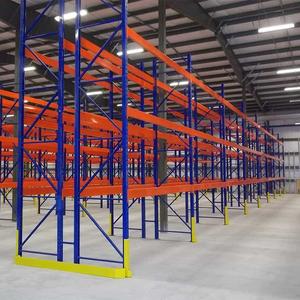
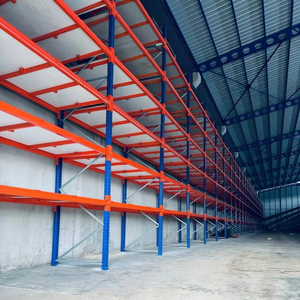
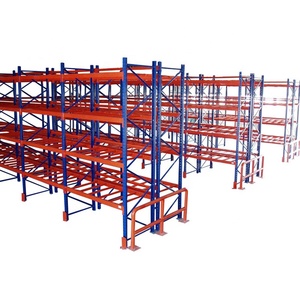
E-commerce requires immediate 100% selectivity across tens of thousands of unique SKUs. Selective racking and multi-tier pick towers provide direct access without rearranging pallets.
Order Fulfillment Velocity
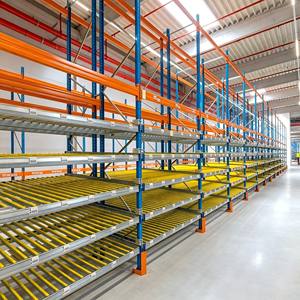
Integrating carton flow rails, gravity rollers, and automated Radio Shuttles speeds up inventory retrieval by up to 60%, reducing fulfillment cycle times drastically.
Rigorous Safety Compliance
Our systems utilize cold-rolled Q235B/Q355B structural steel engineered strictly to AS4084, RMI ANSI MH16.1, and FEM 10.2.02 standards, ensuring compliance during third-party safety audits.
Enterprise OEM/ODM Manufacturing Superiority & Technical Mastery
At SolidFort, quality control begins with raw material selection. We source premium-grade structural steel coils (Q235B and Q355B high-tensile strength steel) directly from top steel mills. Our automated roll-forming equipment shapes columns and step beams with sub-millimeter precision, guaranteeing structural alignment during full-scale assembly.
Rigorous Structural Engineering & Testing Standards
Every pallet racking layout produced by SolidFort undergoes comprehensive Finite Element Analysis (FEA) testing. This visual simulation models beam deflection, column buckling, dynamic forklift impacts, and seismic response acceleration.
| Specification Parameter | SolidFort Factory Standard | Global Industry Baseline | Operational Benefit |
|---|---|---|---|
| Steel Grade | Q235B & High-Yield Q355B Cold-Rolled Steel | Standard Mild Steel (Q195/Q235) | Higher load capacity with lower deadweight; superior impact resistance. |
| Design Standards | AS4084-2012, RMI (ANSI MH16.1), FEM 10.2.02, CE | Basic National Standards | Permit compliance across Americas, Europe, Australia, and Asia. |
| Safety Factor | 1.5 to 1.65 Structural Safety Margin | 1.3 to 1.4 Baseline | Prevents structural failure under accidental overload or forklift bumps. |
| Surface Coating | Automatic Electrostatic Powder Coating (60–80μm) | Manual Spray Painting (30–40μm) | Scratch-resistant, anti-corrosive, durable finish suitable for cold rooms. |
| Lead Time | 10–15 Days Standard (30 Days Engineerd Projects) | 45–60 Days Standard | Accelerates warehouse deployment and fast-tracks project launches. |
Our complete in-house manufacturing process—incorporating automated continuous punching, roll-forming, robotic arm welding, multi-stage acid washing, rust removal, and electrostatic powder curing—guarantees consistent batch quality. Every export shipment includes custom CAD installation drawings, Load Application and Rack Configuration (LARC) plaques, and complete container loading maps.
Future Procurement Trends in Industrial Warehouse Storage (2025–2030)
Procurement directors, logistics engineers, and supply chain managers facing rising industrial real estate costs must evaluate long-term strategic trends before committing capital to storage infrastructure. Over the next decade, global procurement strategies are shifting from simple per-unit material cost calculations to holistic Total Cost of Ownership (TCO) evaluation.
1. Shift Toward High-Density Radio Shuttle & 4-Way Shuttle Systems
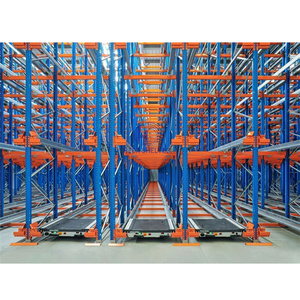
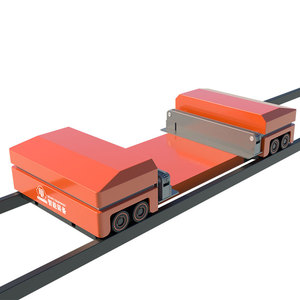
Traditional drive-in racking is increasingly giving way to semi-automated and fully automated shuttle platforms. Radio shuttle racking eliminates forklift access inner aisles, allowing pallets to be stacked up to 30 deep inside specialized channels. By utilizing automated shuttle carts managed via RF remotes or WMS integration, fulfillment facilities double their volumetric storage capacity while decreasing forklift transit damage by over 70%.
2. Direct-from-Manufacturer Sourcing & Factory OEM Partnerships
Enterprise buyers are bypassing intermediary distributors to form direct relationships with specialized Chinese racking manufacturers. Sourcing factory-direct provides significant benefits: tailored CAD engineering, dynamic beam sizing, custom color branding, lower unit costs, and fast delivery timelines. Direct supplier engagement enables faster engineering design iterations during project scoping.
3. Environmental Sustainability & Green Steel Compliance
Global corporate ESG (Environmental, Social, and Governance) targets require logistics centers to reduce carbon emissions across their supply chains. Modern racking procurement prioritizes zero-VOC powder coatings, recyclable packaging, optimized freight container cubic density, and high-strength low-alloy steel that uses less raw material without compromising load limits.
4. Modular Expandability & Dynamic Beam Reconfiguration
E-commerce order volume fluctuates sharply based on seasonal peak shopping periods. Warehouses require structural systems with easily adjustable beam connectors. 50mm, 75mm, and 76.2mm (3-inch) pitch teardrop or diamond beam adjustment patterns allow facility managers to adjust level heights quickly without replacing upright frames.
Product Development & Automation Innovation Trends
The industrial storage sector is undergoing a massive transformation powered by smart automation, advanced material science, and data-driven warehouse management software. Future-proof pallet racking designs now seamlessly integrate digital hardware and structural sensors.
IoT & Real-Time Load Sensing
Sensors integrated directly into step beams and column bases measure real-time load distribution and deflection, warning facility operators of dangerous overloads before structural failure occurs.
4-Way Shuttle & AS/RS Matrix
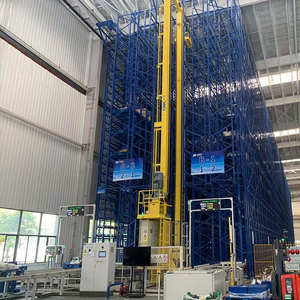
Robotic stacker cranes and 4-way travel shuttles navigate dense rack matrices, reaching heights over 30 meters with minimal human intervention for true 24/7 dark-warehouse operations.
Advanced Seismic Resilience
Dynamic baseplates, heavy-duty floor anchors, and ductile cross-bracing protect installations located in seismic zones, ensuring stability under ground acceleration loads.
Frequently Asked Questions (FAQ) for Pallet Racking Procurement
Direct insights from our senior structural engineering team addressing key technical, cost, and logistics inquiries.
1. Beam Pair Capacity: Calculated as a Uniformly Distributed Load (UDL) based on the section profile, material yield strength, and length of the step or box beam.
2. Upright Frame Capacity: Determined by total system height, frame depth, and critical vertical beam level spacing (unsupported span length). As vertical beam spacing increases, the overall buckling capacity of the frame decreases. Always consult manufacturer Load Application and Rack Configuration (LARC) plaques.
Ready to Optimize Your Warehouse Storage Footprint?
Consult directly with SolidFort’s structural engineering team. Get custom CAD layouts, structural load calculations, and competitive direct-from-factory quotes within 24 hours.
Inquire Now