Engineered Heavy-Duty Storage Systems
Explore factory-direct structural racking solutions engineered to AS4084, RMI (ANSI MH16.1), and FEM standards.
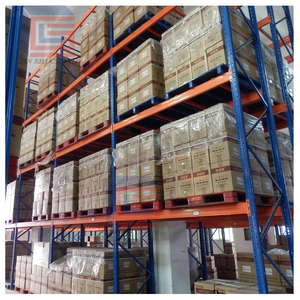
Industrial Heavy Duty Steel Pallet Rack Warehouse Shelving System for Storage, Distribution Center and Factory Use
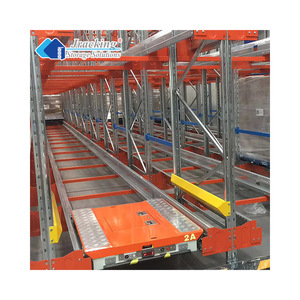
Jracking Heavy Duty CE Certified Warehouse Storage Shelves Rack Stable Two-way Radio Shuttle Rack for Automated Logistics Center
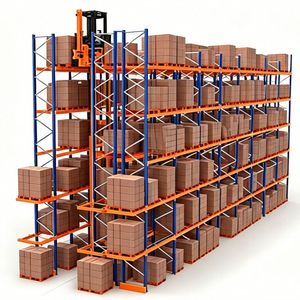
Professional Grade Heavy Duty 5-Layer Steel Powder Coated Storage Racking-Industrial Pallet System High Density Warehouse
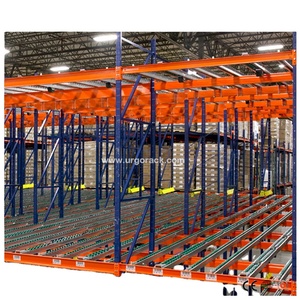
URGO Professional Intensive Storage Flow Rack Roller Pallet Racking For Gravity Racks
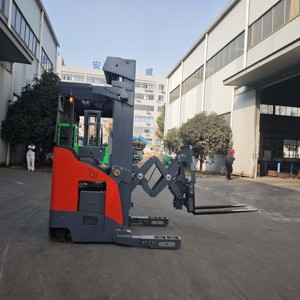
4500 Lbs Heavy Duty High Efficiency Double Deep Pallet Racking Suitable Electric Scissors Reach Truck
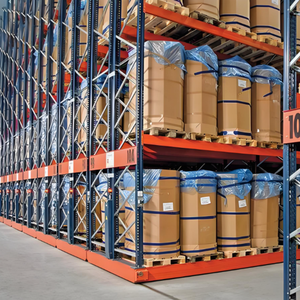
Mobile Pallet Racking Featuring Space-Efficient Design for Multi-Row Storage with Only One Access Aisle Required
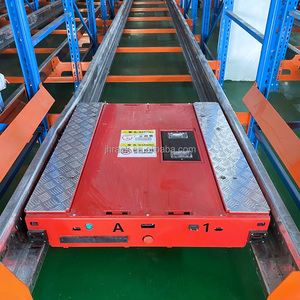
Automatic Racking System Radio Shuttle Intelligent Warehouse Pallet Rack Shelves Heavy Duty Modular Storage Shelf Rack System
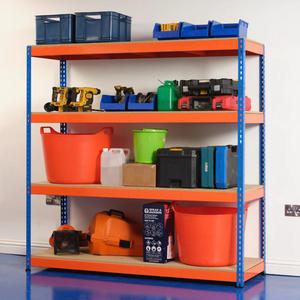
Heavy Duty Industrial Shelving Unit 4 Levels Boltless Adjustable Powder Coated Warehouse Pallet Racking
1. Executive Summary & Enterprise Manufacturing Authority
Modern material handling and supply chain logistics demand structural storage systems capable of handling exceptional payload capacities while optimizing vertical floor density. As a factory-direct pallet racking manufacturer and premier warehouse racking supplier headquartered in Tongan Park, Tongan District, Xiamen, China, SolidFort Storage Equipment Co., Ltd. operates a modern 30,000㎡ production complex engineered specifically for high-precision steel roll-forming, robotic welding, and automated thermosetting powder coating.
Sourcing long load pallet racking systems and high-density industrial shelving requires absolute adherence to structural integrity, rigorous safety compliance, and metallurgical excellence. Designed in compliance with international engineering norms—including AS4084 (Australian Standard for Steel Storage Racking), RMI ANSI MH16.1 (Rack Manufacturers Institute), and FEM 10.2.02 (European Federation of Materials Handling)—our racking hardware provides global procurement directors, 3PL logistics managers, and structural engineers with verified load-bearing reliability and seismic-resistant stability.
Information Gain Insight: Structural safety in heavy-duty racking relies on yield strength matching and structural frame stability under eccentric loading. SolidFort utilizes premium structural steel grades (Q235B and high-strength Q355B cold-rolled steel coils) to eliminate structural deflection and prevent post-yield column buckling during aggressive forklift operations.
2. Technical Engineering: Long Load & Heavy-Duty Pallet Racking Mechanics
Storing long loads—such as structural steel tubes, timber bundles, aluminum profiles, plastic extrusions, and heavy industrial machinery parts—presents unique physics challenges. Standard pallet racks often suffer from uneven load distribution, point-load bending, and inadequate front accessibility. Engineered racking systems must mitigate these dynamic stresses through calculated structural geometries:
Cantilever Racking Mechanics
Eliminates front vertical columns entirely. Freestanding uprights coupled with load-bearing cantilever arms allow continuous horizontal storage for long loads of varying lengths without structural obstruction.
High-Density Shuttle Integration
Combines heavy-duty racking frames with semi-automated radio shuttle carts. Optimized for high-volume homogenous goods, enabling deep-lane storage up to 40 meters while maintaining strict FIFO or LIFO flow controls.
Frame Buckling & Deflection Control
Calculated vertical beam spacing combined with heavy-duty dynamic bracing ensures maximum frame capacity. Designed under L/180 maximum deflection criteria under fully loaded working conditions.
Structural Comparison of High-Density Storage Configurations
To assist warehouse architectural planners in selecting optimal racking infrastructure, the matrix below outlines core operational parameters based on standard procurement specifications:
| Racking Architecture | Direct Selectivity | Storage Density | Floor Space Utilization | Optimal Cargo Application |
|---|---|---|---|---|
| Selective Pallet Racking | 100% Direct Access | Standard (30–40%) | Standard Aisles (3.0–3.5m) | Multi-SKU FMCG, E-Commerce, General Warehousing |
| Cantilever Racking System | 100% Horizontal Access | Medium-High | Variable Open Aisles | Pipes, Lumber, Steel Bars, Sheet Metal, Tubing |
| Radio Shuttle Racking | Lane-Selective (LIFO/FIFO) | Ultra-High (75–85%) | Eliminates Forklift Aisles | Cold Storage, Food & Beverage, High-Volume Batches |
| Double Deep Racking | 50% Immediate Access | High (50–60%) | Deep Reach Truck Aisles | Identical 2-Pallet Batches, Medium Turnover SKUs |
| Drive-In / Drive-Thru | Low (LIFO Priority) | High (65–75%) | Internal Drive-In Aisles | Bulk Homogeneous Goods, Seasonal Inventory |
3. Global Procurement Trends for Industrial Racking Systems
The industrial warehouse equipment sector is undergoing rapid evolution driven by land costs, automation integration, and global ESG (Environmental, Social, and Governance) mandates. Procurement managers sourcing long load racking systems must align their capital expenditure with these critical industry shifts:
A. Shift Toward Vertical Cubic Maximization
Industrial real estate prices have surged globally, forcing facility managers to shift from expanding floor footprints to maximizing vertical cubic space. Modern rack engineering now routinely reaches vertical heights above 12 to 15 meters. This requires stricter manufacturing tolerances on column straightness (under 1/1000 length deviation) and enhanced seismic baseplate engineering to resist dynamic tipping moments.
B. Automated Logistics & ASRS Compatibility
Purely manual forklift racking is rapidly integrating with semi-automated and fully automated platforms. Automated Storage and Retrieval Systems (AS/RS) and pallet runner shuttles require ultra-precise tolerances on beam deflection and guide-rail geometry. Manufacturers must fabricate rack profiles with zero-gap punching accuracy and specialized structural connector hooks to support automated shuttle transition tracks.
C. Environmental Sustainability & Cold Chain Resilience
Energy consumption in cold storage environments makes space optimization critical. Cold storage operations (-25°C to -30°C) demand high-density systems like Radio Shuttle and Mobile Racking to reduce refrigeration volume. Metallurgically, these cold chain applications mandate specialized low-temperature carbon steel alloys treated with electro-zinc galvanized or epoxy powder coatings to prevent hydrogen embrittlement and surface oxidation.
4. Engineering & Metallurgical Development Trends
The continuous progression of structural engineering in warehouse equipment centers on material optimization and structural monitoring:
- High-Tensile Cold-Rolled Steels: Transitioning from standard mild steel to high-yield Q355B steel profiles reduces deadweight while augmenting live load capacity by up to 28%.
- Advanced Corrosion Mitigation: Pre-galvanized beam profiles combined with electrostatic thermosetting powder coatings provide superior impact resistance against forklift tines and atmospheric moisture.
- Structural Health Monitoring (SHM): Integration of IoT impact sensors on key corner upright frames allows real-time structural health monitoring, alerting warehouse safety managers to forklift collisions before structural collapse occurs.
5. SolidFort Manufacturing Advantage & E-E-A-T Guarantee
When procuring heavy-duty storage racks from China, direct manufacturing capabilities ensure both economic efficiency and quality assurance. SolidFort operates as an end-to-end original equipment manufacturer (OEM), providing:
- In-House Manufacturing Control: Continuous cold roll-forming lines, automated punching machines, robotic welding stations, and an integrated powder-coating pipeline within our 30,000㎡ Xiamen facility.
- Free Custom Engineering & CAD Layouts: Our structural engineering team develops complete warehouse CAD designs, floor slab load application layouts, and LARC (Load Application and Rack Configuration) drawings tailored to local building codes.
- Complete International Compliance: ISO9001 certified production lines with products engineered to AS4084, ANSI/RMI MH16.1, and FEM standards, backed by third-party material certificates and CE documentation.
- Export Packaging & Global Delivery: Container-optimized steel strapping, protective edge wrapping, and structured loading plans ensure damage-free arrival across 53+ export destination countries.