Heavy-Duty Warehouse Racking Systems & Solutions
Explore structural steel pallet storage configurations manufactured under ISO 9001 quality protocols. Designed for extreme load capacities, seismic safety, and operational longevity.
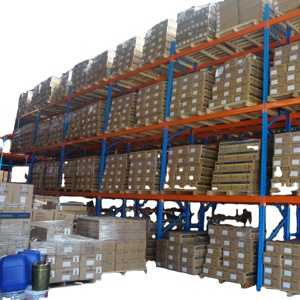
China Manufacturer Heavy Duty Warehouse Shelving / Selective Pallet Rack System
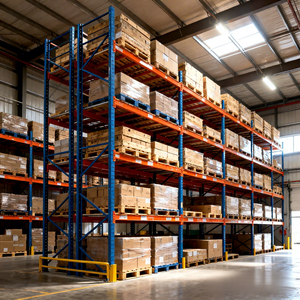
High-Rise Heavy Duty Beam Racking 10-15m Tall Steel Shelves for Logistics Centers
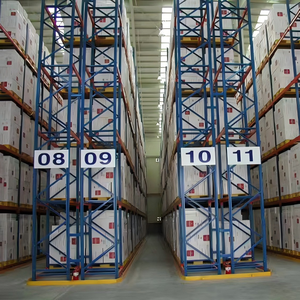
Multi-Layer Heavy Duty Anti-Rust Very Narrow Aisle (VNA) High-Density Storage System
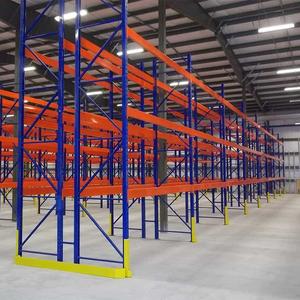
Ventilated Wire Mesh Deck Pallet Racking System Heavy Duty Damp-Proof 2000kg
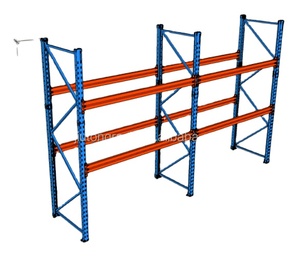
Double Deep Pallet Rack System for Deep Reach Truck High Density Warehouse Storage
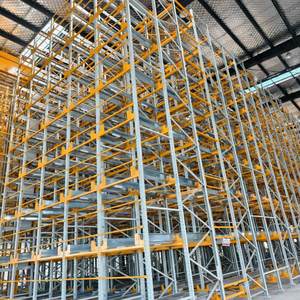
Customizable Four-Way Radio Shuttle Automated Pallet Racking Storage Solution
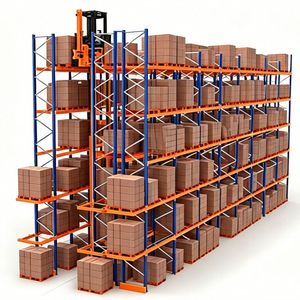
Professional Grade Heavy Duty 5-Layer Steel Powder Coated Industrial Pallet System
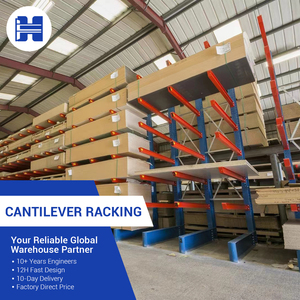
High Capacity Heavy Duty Roll-Formed Cantilever Rack with Adjustable Arms for Pipes & Lumber
Factory-Direct Manufacturing Excellence & Certified Reliability
SolidFort Storage Equipment operates a 30,000㎡ state-of-the-art manufacturing plant in Xiamen, China. Engineered to international building codes, our racking systems empower third-party logistics (3PL), cold storage chains, and industrial manufacturing plants worldwide.
AS4084, RMI & FEM Compliance
Every structural upright profile, box beam, and bracing lock is engineered in alignment with Australian Standard AS4084-2012, US RMI (ANSI MH16.1), and European FEM 10.2.02 standards.
Precision Cold Roll-Forming
Utilizing high-tensile Q235B and Q355B steel strip stock, our continuous automated roll-forming lines guarantee rigid dimensional tolerances, superior yield strength, and structural repeatability.
Full Engineering & CAD Layout Service
We provide zero-cost preliminary engineering CAD layout optimization, including floor slab loading analyses, forklift turning radius calculations, and LARC (Load Application & Rack Configuration) plaques.
Engineering Excellence: Structural Integrity & Load Calculation Fundamentals
In modern industrial storage design, specifying a pallet racking system extends far beyond selecting height and beam length. Under stringent Google Search Quality Rater Guidelines and international building standards, enterprise procurement officers must evaluate structural stability, slab deflection, material yield stress, and seismic safety dynamics.
Pallet racking failure is primarily driven by three factors: column buckling under unsupported vertical height, localized fork-truck impact damage, and excessive beam deflection exceeding international serviceability limits. At SolidFort, structural design begins with calculating the effective length factor ($K$) of upright frames alongside continuous beam bending moments under uniformly distributed load (UDL) conditions.
Deflection Limits (FEM 10.2.02 & RMI Standards): For standard beam pairs under maximum design capacity, vertical beam deflection must not exceed $\mathbf{L / 200}$ (where $L$ is the clear span length of the beam). Exceeding this threshold introduces dynamic instability, accelerates fatigue stress in beam connector hooks, and compromises automatic retrieval operations.
1. Upright Frame Section Geometry & Punch Profiles
Upright posts engineered by top-tier manufacturers feature complex multi-rib cross-sectional profiles. SolidFort's uprights utilize up to 12 distinct bending cold-formed deformation angles. This profile geometry significantly increases the radius of gyration ($r$), enhancing resistance to torsional-flexural buckling without increasing steel weight unnecessarily.
Post perforation profiles (such as teardrop, 50mm pitch omega, or 75mm pitch diamond patterns) are precision-punched prior to roll-forming. This maintains grain integrity in the structural steel, avoiding localized stress concentrations that can lead to micro-fractures over extended load cycles.
2. Slab Anchors, Baseplates, and Seismic Shear Distribution
Every rack row requires dynamic mechanical anchoring to the concrete floor slab. Per ANSI/RMI MH16.1, anchor diameter and embedment depth must transfer tension uplift forces (caused by asymmetric loading or seismic activity) and horizontal shear stresses directly into the reinforced concrete slab. Standard practice requires a minimum concrete compressive strength of 3,000 PSI (20.6 MPa) with heavy-duty wedge expansion anchors specified by structural engineering calculations.
| Steel Grade Standard | Yield Strength ($f_y$) | Tensile Strength ($f_u$) | Recommended Industrial Application |
|---|---|---|---|
| Q235B (SS400 Equivalent) | $\ge 235\text{ MPa}$ | $370 - 500\text{ MPa}$ | Standard ambient pallet racks, step beams, lighter duty uprights |
| Q355B (S355 / High Tensile) | $\ge 355\text{ MPa}$ | $470 - 630\text{ MPa}$ | High-bay VNA racks (>10m), heavy duty box beams, automated shuttle rails |
| Pre-Galvanized Coil (Z275) | $\ge 250\text{ MPa}$ | $\ge 330\text{ MPa}$ | Cold storage facilities, high humidity environments, outdoor cantilever systems |
Industrial Racking Architecture Selection Matrix
Compare high-density warehousing systems to evaluate selectivity, floor space utilization, inventory flow models, and CAPEX expenditure per pallet position.
| System Architecture | Pallet Selectivity | Floor Space Efficiency | Inventory Flow | Forklift Compatibility | Relative CAPEX / Position |
|---|---|---|---|---|---|
| Selective Pallet Racking | 100% Direct | 40% – 50% Utilization | FIFO / LIFO | Standard Counterbalance / Reach | Baseline (Lowest) |
| Very Narrow Aisle (VNA) | 100% Direct | 65% – 75% Utilization | FIFO / LIFO | VNA Turret Truck / Articulated | Moderate (+35%) |
| Drive-In / Drive-Thru | Low (15%) | 75% – 85% Utilization | LIFO (Drive-In) / FIFO | Reach Truck / Counterbalance | Moderate (+45%) |
| Double Deep Racking | 50% Direct | 55% – 65% Utilization | LIFO Priority | Deep-Reach Pantograph Truck | Low-Moderate (+20%) |
| Radio Shuttle Automation | By Channel | 85% – 90% Utilization | Flexible FIFO / LIFO | Standard Counterbalance + Shuttle unit | High Investment |
| Cantilever Racking System | 100% Open Front | Variable (Long loads) | N/A (Bulk stock) | Side Loader / Multi-directional | Specialized |
Strategic Sourcing Trends: The Future of Industrial Pallet Storage (2025–2030)
As global supply chains shift toward automated fulfillment, real-time inventory management, and strict ESG (Environmental, Social, and Governance) targets, procurement trends for pallet racking systems are evolving rapidly. Modern facility directors are transitioning from passive steel structures to intelligent, high-density automated infrastructure.
1. Four-Way Radio Shuttle & AS/RS Convergence
The industry is experiencing widespread adoption of 4-Way Pallet Shuttles working inside dense racking grids. These battery-driven robotic units traverse longitudinal and transverse rails, enabling fully automated pallet movement controlled by Warehouse Execution Software (WES).
2. ESG Green Steel & Zero-VOC Epoxy Finishes
Global logistics operators now require eco-friendly manufacturing footprints. Enterprise buyers prefer suppliers utilizing recycled scrap steel processed via Electric Arc Furnaces (EAF) and non-toxic powder coatings free from volatile organic compounds (VOCs) and heavy metal pigments.
3. IoT Structural Health Monitoring
Next-generation high-bay warehouses are integrating strain gauge sensors, wireless impact monitors, and tilt detectors directly onto critical upright posts. Real-time telemetry alerts floor managers immediately when a forklift strike occurs or structural overload is detected.
Industrial Procurement & Engineering FAQ
Authoritative technical answers to common questions asked by warehouse engineers, safety auditors, and enterprise purchasing managers.
What is the typical cost breakdown per pallet position for industrial racking?
Material pricing varies based on global steel indices, system height, load rating, and finish. Standard Selective Pallet Racking generally averages $50 to $100 per pallet position for materials. High-density semi-automated systems (such as Radio Shuttle or Push Back racking) range from $120 to $260 per position, excluding robotic shuttle units. Fully automated AS/RS high-bay systems require detailed engineering proposals based on vertical height and throughput specs.
Why is floor anchoring mandatory, and what are the building code standards?
Per ANSI/RMI MH16.1 and European FEM 10.2.02 codes, every baseplate attached to a structural rack column must be securely anchored to the concrete slab with approved mechanical expansion bolts or chemical anchors. Anchoring prevents frame overturning caused by accidental forklift bumping, maintains column alignment under dynamic loading, and provides calculated shear resistance during seismic events.
How are beam pair load capacities calculated safely?
Beam capacity is calculated assuming a Uniformly Distributed Load (UDL) across a pair of beams. The rating considers both beam profile section modulus ($Z_x$) and permissible deflection limits ($\le L/200$). It is critical to note that point loading (such as heavy machinery feet) drastically reduces beam capacity compared to standard double-pallet evenly distributed loading. Always refer to official Load Application and Rack Configuration (LARC) drawings provided by SolidFort engineers.
What standard dimensions are used for 40x48 inch GMA pallets?
For standard North American GMA pallets (40" wide x 48" deep), the industry standard upright frame depth is 42 inches. This depth allows a 3-inch pallet overhang on both front and rear beam faces, ensuring proper beam seat engagement. The standard beam length for holding two 40" wide pallets side-by-side (with required 3-inch side clearances) is 96 inches (8 feet / 2438mm).
What mandatory maintenance and safety inspection cadence is required?
International safety standards (EN 15635 & OSHA guidelines) mandate formal annual safety inspections performed by a certified structural rack inspector. Additionally, warehouse operators must conduct weekly or monthly visual checks to detect damaged upright bases, twisted diagonal braces, missing beam safety locking pins, or visible beam sag. Any damaged component flagged under "Red Risk" status must be unloaded immediately and replaced.
Optimize Your Warehouse Footprint Today
Consult directly with SolidFort's structural engineers. Receive a zero-cost CAD warehouse layout, detailed LARC capacity calculations, and factory-direct pricing within 24 hours.