Featured Industrial Pallet Racking & Shuttle Systems
Engineered for maximum volumetric efficiency, heavy-duty durability, and seamless integration with forklift and autonomous transport logistics.
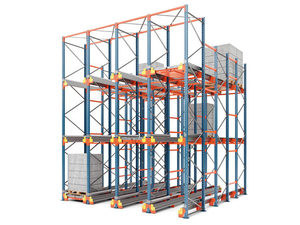
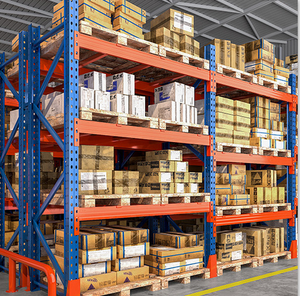
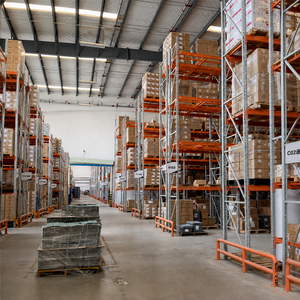
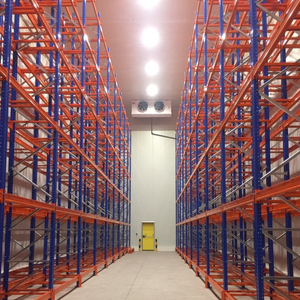
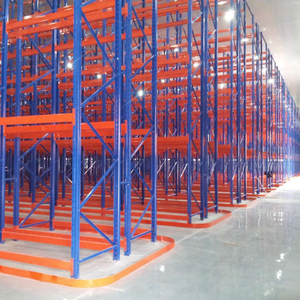
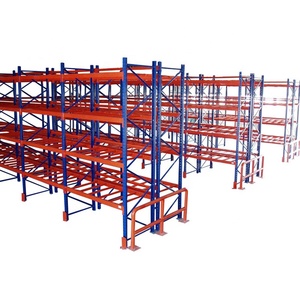
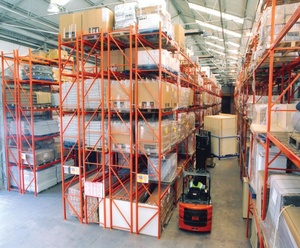
SolidFort Engineering & Global Export Capability
Combining a 30,000㎡ modern manufacturing facility with international structural design compliance to deliver high-yield storage infrastructure worldwide.
Triple Design Standard Compliance
Every rack structure engineered by SolidFort complies strictly with AS4084:2012 (Australia), ANSI/RMI MH16.1 (USA), and FEM 10.2.02 (Europe) code requirements. We execute Finite Element Analysis (FEA) to verify structural safety under maximum dead and dynamic live loads.
Full In-House Manufacturing Control
Equipped with 24 automated roll-forming production lines, robotic welding stations, and an eco-friendly automatic electrostatic powder coating system using premium steel grades (Q235B & Q355B). ISO 9001 certified quality checks guarantee dimensional tolerances down to millimeter precision.
Global Engineering & Export Services
From preliminary CAD layout blueprints and Load Application & Rack Configuration (LARC) drawings to container packing optimization (FOB/CIF/DDP), SolidFort ensures seamless technical support for international contractors, system integrators, and 3PL warehousing companies.
The Engineering Blueprint of Pallet Shuttle Racking Systems
As modern warehousing transitions from basic static shelving toward high-density automated infrastructure, the Pallet Shuttle Racking System (also known as Radio Shuttle Racking or Autonomous 4-Way Shuttle Racking) has emerged as the definitive benchmark for space optimization. Designed to solve the throughput bottlenecks and space inefficiencies inherent in traditional Drive-In and Selective racking systems, shuttle technology provides semi-automated and fully automated pallet handling inside high-density storage channels.
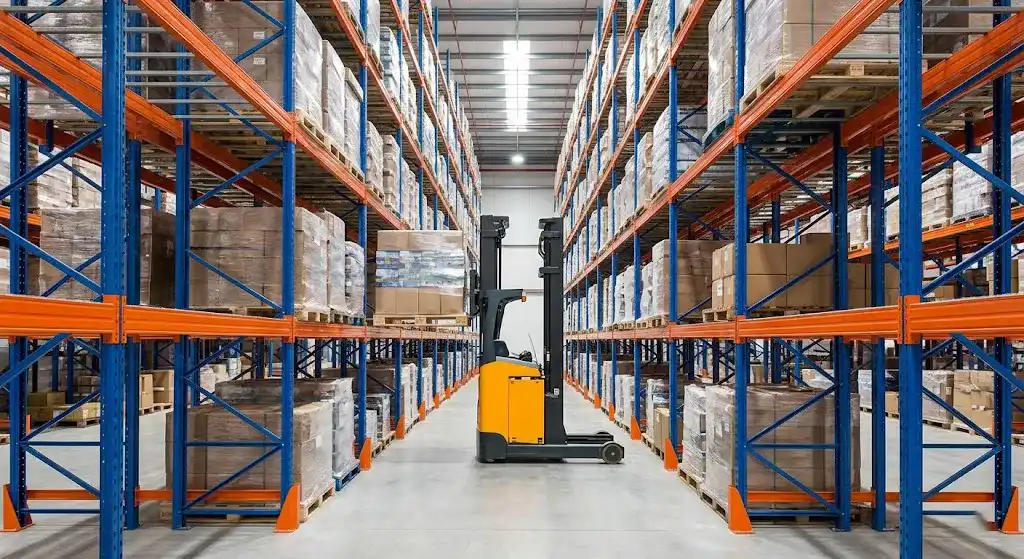
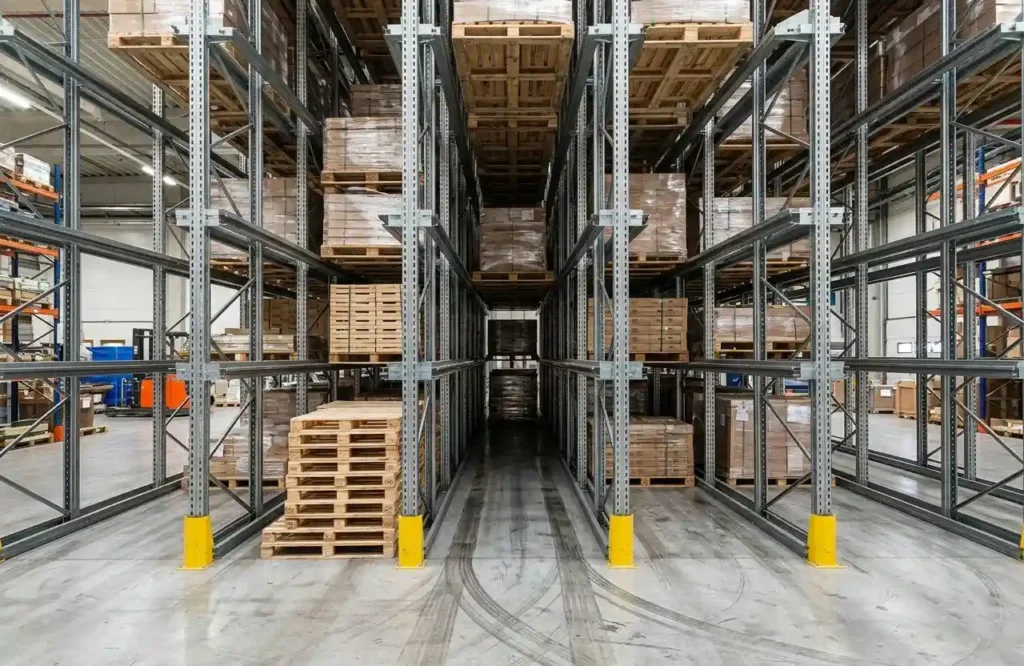
System Architecture & Key Components
Unlike standard static racking that relies on forklifts driving into the storage rows (which increases collision risk and slows down operational cycle times), a pallet shuttle system utilizes a self-powered, remote-controlled or software-directed shuttle cart that travels on specialized rails inside the storage lanes. Key components include:
- Structural Steel Upright Frames: Formed from cold-rolled Q355B high-tensile steel, punched on 50mm or 75mm pitch matrixes, anchored securely into the floor slab via chemical or mechanical anchors.
- Custom-Formed Shuttle Guide Rails: Engineered profiles that fulfill a dual purpose: acting as structural tie-beams across upright frames while providing precision guide tracks and load-bearing ledges for the shuttle wheels.
- Autonomous Shuttle Carts (2-Way or 4-Way): Equipped with internal electric lifting mechanisms (hydraulic or electro-mechanical), optical sensors, LiDAR obstacle detection, and long-life Lithium Iron Phosphate (LiFePO4) power cells.
- Radio / Wi-Fi Control Protocol: Operating on 2.4 GHz / 5.8 GHz wireless bands or industrial fieldbus networks, linking the shuttle to handheld RF remotes, Warehouse Execution Systems (WES), or Warehouse Management Systems (WMS).
2-Way Radio Shuttle vs. 4-Way Intelligent Shuttle: Architectural Comparison
When specifying a high-density warehouse storage facility, logistics engineers must evaluate operational dynamics between 2-Way semi-automated shuttles and 4-Way fully autonomous shuttle platforms:
| Technical Dimension | 2-Way Radio Shuttle System | 4-Way Intelligent Shuttle System |
|---|---|---|
| Directional Motion | Longitudinal travel (In/Out within a single channel) | X & Y Directional (Transverse lane switching & longitudinal travel) |
| Forklift Dependency | Forklift required to move shuttle between lanes/levels | Shuttle changes lanes and levels independently via vertical lifts |
| System Automation Level | Semi-Automated (Operator initiated via RF remote) | Fully Automated ASRS (Direct WMS/WCS API integration) |
| Storage Density | Very High (80% - 85% footprint utilization) | Maximum (85% - 92% cubic footprint utilization) |
| Throughput Rate | 30 – 45 pallets / hour per forklift driver | 60 – 120+ pallets / hour (Multi-shuttle fleet coordination) |
| Cold Storage Application | Proven down to -25°C with heated battery cells | Proven down to -30°C with automated thermal monitoring |
Future Sourcing & Technology Trends in Warehouse Storage
Key technological shifts driving warehouse capital expenditure and storage infrastructure decisions across global supply chains over the next decade.
1. Transition from Static to Smart Semi-Automated Infrastructure
Soaring industrial real estate costs and chronic warehouse labor shortages are accelerating the transition from standard selective racking to semi-automated shuttle systems. Procurement teams are prioritizing modular shuttle systems that allow incremental capacity upgrades without requiring a complete overhaul of existing buildings.
2. Energy Efficiency & Cold-Chain Cost Optimization
Refrigerated and frozen food warehouses incur massive electrical overhead. High-density shuttle systems reduce the cubic air volume requiring refrigeration by up to 50% compared to traditional aisle layouts. Next-generation shuttles now utilize fast-charging supercapacitors and regenerative braking to cut power consumption significantly.
3. Seismic Safety & Structural Health Monitoring
International building codes are enforcing stricter seismic compliance standards (such as US IBC/RMI and Australian AS4084). Modern pallet racking installations increasingly integrate IoT strain sensors and accelerometers directly into heavy-duty upright frames to provide real-time structural health telemetry and automated impact warning alerts.
Pallet Shuttle Racking Procurement FAQ
Detailed engineering and commercial answers to help procurement managers, logistics engineers, and warehouse owners make informed purchasing decisions.
What is the average cost per pallet position for a radio shuttle racking system?
The material investment for a Radio Shuttle Racking system typically ranges from USD $100 to $220 per pallet position, depending on structural height, seismic load factors, rail specifications, and beam lengths. When factorizing the autonomous shuttle vehicles (costing roughly $8,000–$15,000 per shuttle unit), the overall ROI remains highly favorable, paying back within 18–24 months through reduced labor overhead and space savings.
How does pallet shuttle racking compare to Drive-In racking in operational safety?
Pallet shuttle racking dramatically increases operational safety. In traditional Drive-In racking, forklifts must physically maneuver inside tight racking channels, resulting in frequent upright damage and elevated risk of rack collapse. In contrast, with a shuttle system, forklift drivers operate strictly in the main transfer aisle, loading pallets onto the entry point of the rail channel. The shuttle handles all internal transport, virtually eliminating rack impact hazards.
What are the required concrete slab specifications for anchoring heavy-duty racking?
Under RMI and AS4084 standards, heavy-duty racking uprights must be anchored to a continuous reinforced concrete slab. Generally, a minimum slab thickness of 150mm to 200mm (6–8 inches) with a compressive strength of at least 3,000 to 4,000 PSI (20–25 MPa) is required. High-bay shuttle systems or installations in seismic zones may require engineered slab depths exceeding 250mm with specialized epoxy anchors.
Can a radio shuttle system handle both FIFO and LIFO inventory management?
Yes. A pallet shuttle racking system can be configured for both LIFO (Last-In, First-Out) and FIFO (First-In, First-Out) logic. For LIFO operations, loading and unloading take place from the same aisle face (ideal for wall-adjacent rows). For FIFO operations, the system is designed with separate loading and retrieval aisles on opposite sides of the rack structure (ideal for high-turnover perishable food or pharmaceutical logistics).
How long does a shuttle battery charge last, and what is its lifespan?
SolidFort shuttle carts utilize high-capacity Lithium Iron Phosphate (LiFePO4) battery packs. A full charge (which takes approximately 3 to 4 hours) provides 8 to 10 hours of continuous heavy-load operation. Fast-swap battery tray designs allow continuous 24/7 operation with dual battery sets. LiFePO4 chemistry yields over 2,500 to 3,000 charge cycles (equivalent to 7–10 years of standard operational life).
What manufacturing lead time and export terms does SolidFort provide?
Standard pallet racking orders ship in 10 to 15 days from our Xiamen plant, while complex custom-engineered ASRS or 4-way shuttle structural orders take approximately 30 days. We support FOB (Xiamen Port), CIF, CFR, and DDP (Delivered Duty Paid) terms. Every container shipment includes custom loading plans, certified steel mill test certificates (MTC), assembly drawings, and installation video manuals.
Optimize Your Warehouse Capacity & Throughput Today
Contact SolidFort's engineering team for free CAD warehouse layout designs, precise load calculations, and factory-direct pricing quotes tailored to your exact facility dimensions.