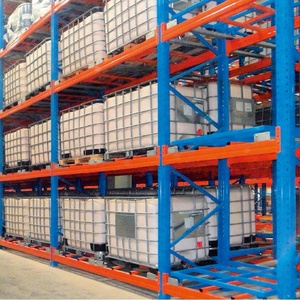
Push Back Racking
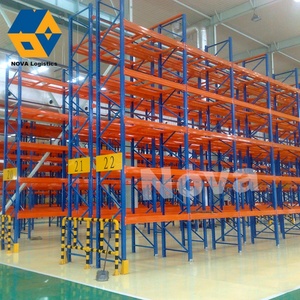
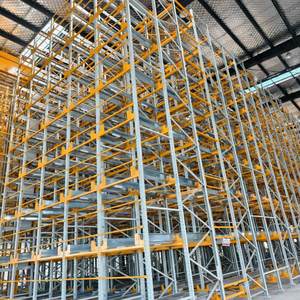
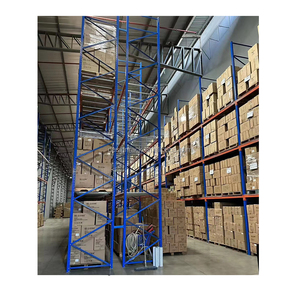
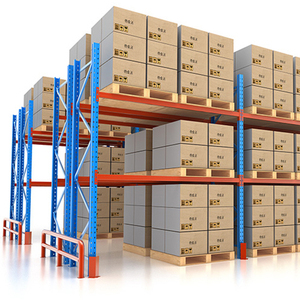

In modern industrial logistics, maximizing volumetric cube utilization while preserving high-throughput material velocity is the paramount objective for facility directors, supply chain engineers, and warehouse planners. Modern pantograph and moving-mast reach trucks operate in tight working corridors ranging from 2.7 to 3.2 meters clear aisle width—significantly narrower than traditional counterbalanced forklift aisles (which require 3.8 to 4.5 meters). Consequently, reach truck pallet racking systems demand highly precise structural manufacturing tolerances, specific frame profile configurations, and engineered baseplate anchoring mechanics.
Unlike standard wide-aisle selective racking, reach truck racking setups frequently utilize single-deep narrow aisle or double-deep row layouts. In a double-deep racking arrangement, specialized pantograph reach trucks extend their fork mechanisms through the first rack bay to retrieve or place pallets located in the second, deeper position. This increases volumetric floor space utilization by up to 30%–45% compared to single-selective layouts by eliminating every second operating aisle.
Designed specifically for turning radiuses between 2,700mm and 3,100mm, reducing wasted floor space and increasing rack bays per square meter.
Utilizes Q235B and Q355B structural steel profiles, offering optimal strength-to-weight ratios under heavy dynamic impact and high point loading.
Fully engineered in strict accordance with ANSI/RMI MH16.1, Australian Standard AS4084-2012, and European FEM 10.2.02 codes.
To safely accommodate the elevated lift heights inherent to reach truck operations—which routinely reach between 6.5 meters and 13 meters high—the structural integrity of upright frame columns becomes critical. Vertical plumbness must be held within strict tolerances (typically $1/500$ of total frame height under full rated load). Furthermore, beam deflection under maximum uniformly distributed loads (UDL) is constrained to a maximum ratio of $L/180$ per RMI specifications, preventing premature fatigue or dangerous pallet tilting during high-bay pantograph extension.
When selecting the ideal structural framework for your facility, understanding the trade-offs between selectivity, storage density, equipment investment, and throughput velocity is imperative. The table below outlines technical metrics established by our Senior Warehouse Structural Engineering Team:
| Racking Architecture | Aisle Width Req. | Storage Density | Selectivity | Forklift Type Required | Ideal Application |
|---|---|---|---|---|---|
| Single-Deep Selective | 2.8m – 3.2m | Standard (40-50%) | 100% Direct Access | Standard / Reach Truck | High SKU count, FMCG, E-commerce picking |
| Double-Deep Reach Rack | 3.0m – 3.3m | High (60-70%) | 50% Immediate | Pantograph Double-Deep Reach | Homogeneous goods, cold storage, high-volume SKUs |
| Very Narrow Aisle (VNA) | 1.6m – 1.9m | Maximum (75-85%) | 100% Direct Access | VNA / Turret / Flexi Truck | High-density archives, high-cube distribution centers |
| Drive-In / Drive-Thru | Drive-in Lanes | Very High (75-80%) | Low (LIFO / FIFO) | Counterbalance / Reach Truck | Bulk seasonal inventory, low-variety manufacturing |
As a leading Chinese manufacturer and global exporter of high-grade industrial storage systems, SolidFort Storage Equipment Co., Ltd. operates a 30,000 square meter integrated production plant in Tongan Park, Xiamen. Built on a foundation of rigorous structural engineering and metallurgical precision, SolidFort bridges the gap between factory-direct cost efficiency and international structural safety standards.
Every reach truck racking system delivered by SolidFort undergoes comprehensive structural analysis prior to fabrication. Our engineering team utilizes finite element analysis (FEA) software to simulate seismic dynamics, point load stresses, and frame buckling profiles based on localized building codes (including seismic zone multipliers and concrete slab compressive strength ratings).
From raw strip steel coils to finished epoxy powder-coated racking profiles, SolidFort maintains 100% in-house quality control across every production stage:
We provide global B2B procurement partners, distributors, and logistics operators with end-to-end engineering documentation:
As logistics facilities adapt to rising urban land costs, labor shortages, and ESG sustainability directives, procurement strategies for warehouse storage equipment are shifting rapidly. Logistics leaders and procurement directors must evaluate future-proof racking architectures that align with emerging material handling technology.
The acceleration of warehouse automation has driven widespread adoption of Autonomous Mobile Robot (AMR) reach trucks and Automated Guided Vehicle (AGV) forklifts. Automated reach trucks operate with tighter positioning tolerances than human operators, requiring racking manufacturers to maintain strict verticality, beam deflection consistency, and specialized optical guide targets along rack columns. Future-ready racking systems incorporate sensor-compatible reflector brackets and ultra-flat floor baseplates to facilitate seamlessly guided robotic placement.
Sustainability mandates are pushing racking manufacturers toward ultra-high-strength steel grades (such as Q355B and Q460 cold-formed steels). Higher yield strength allows structural engineers to reduce material weight without sacrificing overall beam carrying capacity or frame rigidity. Additionally, pre-galvanized and hot-dip galvanized finishes are increasingly favored over traditional powder coating in cold storage and high-humidity environments due to zero-VOC emissions and decades-long maintenance-free lifespan.
With cold storage facilities facing extreme operational energy costs, maximizing cubic storage density per cubic meter of refrigerated space is critical. Double-deep reach truck racking continues to outpace standard selective racking in cold storage procurement due to its balance of low capital expenditure compared to full AS/RS systems and high density compared to single-selective layouts. Incorporating heavy-duty pallet support bars, wire mesh decks, and heavy column protectors ensures longevity against thermal contraction stresses.
Industry 4.0 innovations are entering the structural racking domain. Enterprise procurement managers are specifying rack structures fitted with integrated IoT strain gauges and impact sensors along bottom upright columns. These sensors record forklift collision impacts in real time, alerting safety managers to structural damage before catastrophic frame collapse can occur.
From a metallurgical and manufacturing perspective, industrial racking has evolved beyond simple structural angle iron into sophisticated, engineered cold-formed steel sections. Key technological advancements include:
Standard reach trucks typically operate in clear aisle widths between 2.7 meters and 3.2 meters (approx. 9 to 10.5 feet) for standard 1,000mm × 1,200mm pallets. The precise aisle requirement depends on the reach truck’s chassis length, turning radius, load length, and whether pantograph extensions are used. Always consult your reach truck supplier's AST (Right Angle Stacking Aisle) specification before finalized rack row positioning.
Single-deep racking stores one pallet per row depth, offering 100% direct pallet selectivity. Double-deep racking stores pallets two rows deep (back-to-back), doubling the depth of each rack bank. Double-deep systems increase pallet storage density by 30%–45% by eliminating aisles, but require specialized double-deep reach trucks with extended pantograph forks and offer 50% immediate pallet selectivity (LIFO inventory control per deep channel).
Pallet rack load capacity is calculated based on two primary structural metrics:
1. Beam Pair Capacity: Calculated as Uniformly Distributed Load (UDL), ensuring beam deflection does not exceed $L/180$ (where $L$ is beam length).
2. Upright Frame Capacity: Determined by maximum bay load weight, frame height, and crucially, the maximum vertical unbraced beam distance. As vertical spacing between beam levels increases, the overall buckling capacity of the upright frame decreases. Always follow the manufacturer's official LARC load plaque.
Yes, absolutely. Under ANSI/RMI MH16.1 and AS4084-2012 building standards, every single rack column baseplate must be anchored securely to the structural concrete slab using approved mechanical wedge bolts or chemical anchor studs. Anchoring prevents rack displacement during loading, resists overturning moments from high reach lifts, and maintains frame stability during mild forklift impacts or seismic activity.
SolidFort manufactures all pallet racking systems in strict compliance with international structural standards:
• ANSI/RMI MH16.1 (Specification for the Design, Testing and Utilization of Industrial Steel Storage Racks - USA)
• AS4084-2012 (Steel Storage Racking - Australia)
• FEM 10.2.02 / EN 15512 (European Federation of Materials Handling Racking Codes)
• ISO 9001:2015 certified quality management and CE conformity certification.
Standard orders for selective and double-deep racking are manufactured and dispatched within 10 to 15 business days from deposit confirmation. Large engineered projects (e.g., custom high-bay automated installations) typically require 25 to 30 days. We offer flexible international trade terms including FOB Xiamen, CIF, CFR, and DDP (Delivered Duty Paid) with container loading optimization plans provided for every shipment.
Because reach trucks operate in tight working corridors, protecting corner upright columns is critical. We recommend installing heavy-duty steel column protectors (floor-anchored or snap-on polyurethane guards), end-of-aisle double-guard rails, and guide rails along bottom aisle levels to prevent fork chassis collision with rack frames.
Formal structural safety inspections by a qualified racking engineer should be conducted at least once every 12 months. In addition, warehouse operators should establish weekly visual checks to inspect for damaged upright columns, dislodged safety pins, bent beam levels, or overloaded bays. Damaged components must be isolated and replaced immediately using OEM structural parts.
Contact SolidFort's structural engineering team today for a free CAD warehouse floor plan layout, pallet capacity calculation, and factory-direct quotation.