Industrial Storage Systems & Racking Assemblies
Precision-manufactured heavy-duty pallet racking systems designed for structural resilience, maximum throughput, and compliance with global seismic and building standards.
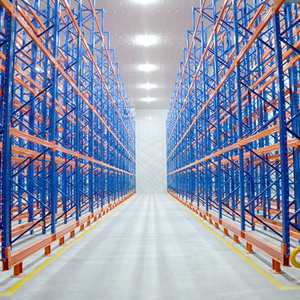
Q235 Cold Rolled Steel Powder Coated Anti Rust Back to Back Frame High Density Pallet Storage Double Deep Pallet Racking
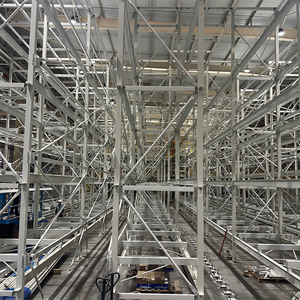
Engineering Design Pallet Rack System with High Density Layout
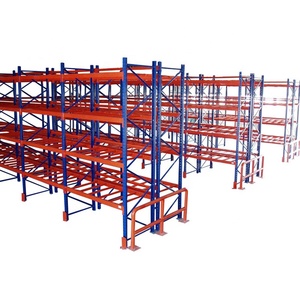
2024 Competitive Advantage Pallet Racking Storage Heavy Duty Industrial Pallet Shelf Warehouse Racking System
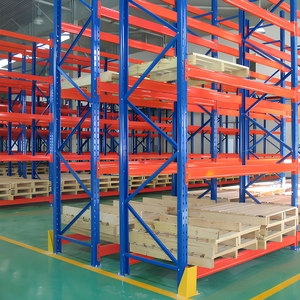
Steel Heavy Duty Double Deep 5 Pallet Rack High Density Warehouse Racking System Space Saving Reach Truck Access OEM Supplier
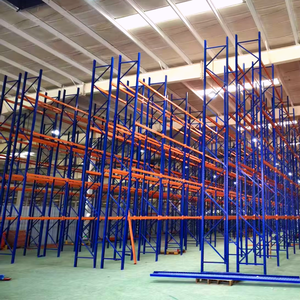
2-5 Tier Wide Aisle Heavy Load Pallet Racking for Automated Warehouse Online Order Fulfillment Hub
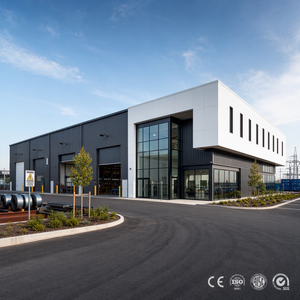
Customized Prefabricated Steel Structure Warehouse Metal Industrial Workshop Logistics Storage Building Design Service
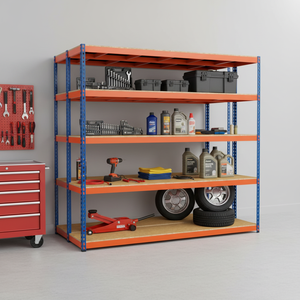
4 Tier Industrial Heavy Duty Boltless Racking Garage Workshop Shelving Warehouse Shelves
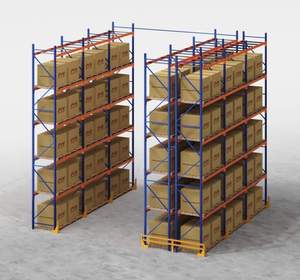
Conventional Single Row Pallet Racking
Engineering Fundamentals of Single Deep Selective Pallet Racking Systems
Single Deep Pallet Racking—widely recognized across global supply chain infrastructure as Standard Selective Racking—remains the baseline architectural choice for modern material handling. Offering 100% direct selectivity to every pallet position, single deep racking eliminates the operational friction associated with handling multi-depth block stacking or dynamic pallet shuffling.
From an structural engineering perspective, single deep pallet racking consists of vertical cold-rolled steel upright frames interconnected by horizontal load-bearing beams. The system is designed to support a vast array of pallet sizes (including GMA 48"x40", CHEP, Euro 1200x800mm, and Australian Standard 1165x1165mm) with variable vertical beam level adjustments, typically engineered on 50mm, 75mm, or 76.2mm (3-inch) pitch increments.
Information Gain Insight: Structural yield capacity in single deep pallet racks is not merely governed by steel thickness, but by the cold-formed profile geometry and vertical beam spacing. Increasing the unsupported column height between beam levels reduces the frame's overall buckling capacity exponentially based on Euler's critical column load parameters.
Structural Mechanics & Material Selection: Q235B vs. Q355B Steel Profiles
At SolidFort Storage Equipment, our engineering matrix specifies structural-grade Q235B and high-yield Q355B cold-rolled steel coils sourced exclusively from tier-1 steel mills (such as Baosteel and Shougang). Cold roll-forming alters the yield strength of the raw steel sheet, creating work-hardening characteristics that increase structural strength at key stress points along the upright post geometry.
Upright Frame Columns
Omega (Ω) and teardrop profile geometries engineered with stiffening ribs to resist torsional buckling under asymmetrical load distribution.
- Profile Depths: 80mm to 120mm
- Thickness Range: 1.8mm – 2.5mm
- Conforms to AS4084-2023 & FEM 10.2.02
Box & Step Beams
Continuous twin-C cold-rolled sections robotic-welded to heavy-duty 3 or 4-hook connectors for maximum torsional resistance.
- Beam Heights: 80mm to 160mm
- Deflection limit strictly capped at L/180
- Safety lock pins prevent dislodgement
Surface Finishing Technology
High-durability thermosetting epoxy powder coating applied via automated electrostatic spray lines following 7-stage chemical pretreatment.
- Coating Thickness: 60 to 90 microns
- Salt spray resistance > 500 hours
- Hot-dip galvanizing available for cold storage
Technical Performance & Density Matrix: Comparing Racking Architectures
When selecting a single deep pallet racking supplier, warehouse project managers must weigh throughput requirements, aisle dimension constraints, and equipment compatibility. The matrix below details key performance metrics across leading structural racking configurations.
| Racking Architecture | Direct Selectivity | Storage Density | Aisle Width Required | Forklift Compatibility | Ideal Application |
|---|---|---|---|---|---|
| Single Deep Selective Racking | 100% (Maximum) | Standard (approx. 40%) | 3.0m - 3.8m (Standard) / 1.6m - 1.9m (VNA) | Counterbalance, Reach, VNA Turret | High SKU variety, fast-moving consumer goods, 3PL hubs |
| Double Deep Pallet Racking | 50% (Requires pantograph) | High (+25-30% vs Single) | 3.1m - 3.5m | Deep-Reach Forklifts | Homogeneous SKUs, medium turnover, manufacturing reserves |
| Drive-In / Drive-Thru Racking | Low (LIFO / FIFO by lane) | Very High (up to 75%) | N/A (Truck enters system) | Counterbalance, Specialized Reach | Bulk storage, seasonal goods, cold storage facilities |
| Radio Shuttle Automated Racking | Medium (Automated FIFO/LIFO) | Maximum (up to 85%) | 3.0m (Transfer aisle only) | Standard Forklift + Automated Shuttle | High-volume food & beverage, cold chain logistics |
Future Sourcing & Procurement Trends in Industrial Storage (2025–2030)
The global warehouse automation and storage rack export market is undergoing structural shifts driven by supply chain volatility, land costs, and automated handling equipment integration. Procurement teams must account for four major industry developments when specifying single deep racking systems:
1. Convergence with Autonomous Mobile Robots (AMRs)
Traditional single deep single-row rack configurations are increasingly modified to incorporate AMR bottom-level tunnel clearance and camera-guided reflective target alignment for automated pallet drop-offs.
2. Seismic Rigidity & Advanced Finite Element Analysis (FEA)
Global standards bodies (RMI ANSI MH16.1 and AS4084-2023) now mandate full FEA dynamic response spectra simulations to guarantee rack stability under high-magnitude earthquake forces without structural collapse.
3. Decarbonized Steel & Traceable Low-CO2 Manufacturing
European and North American buyers prioritize racking manufacturers utilizing electric arc furnace (EAF) recycled steel and low-VOC powder coating processes to align with Scope 3 carbon emission requirements.
Why Partner with SolidFort: Manufacturing Excellence & Direct Factory Supply
Operating from a modern 30,000㎡ industrial manufacturing complex in Tongan District, Xiamen, China, SolidFort Storage Equipment Co., Ltd. serves as an OEM and ODM production powerhouse for international distributors, system integrators, and industrial facility owners in more than 53 countries.
Compliant Design Engineering
Every single deep racking system is custom-engineered using proprietary software calculation packages compliant with AS4084, FEM 10.2.02, and ANSI MH16.1. We generate load plaques and structural LARC drawings for permit approval.
Agile Lead Times & Stock Reserves
With high-capacity automated continuous roll-forming production lines and continuous structural coil stock, standard order delivery schedules range from 10 to 15 business days from drawing approval to container sealing.
Export-Ready Packaging
Structural columns and beams are bundled with steel strapping, corrugated corner protection, and moisture-barrier shrink wrapping optimized for 40ft High Cube container stuffing and damage-free transit.
Single Deep Pallet Racking Procurement FAQ
Technical guidance compiled by SolidFort's structural storage engineering team to address common buyer and specifier inquiries.
What is the typical cost per pallet position for single deep selective pallet racking?
Material costs for standard single deep selective pallet racking generally range from USD 50 to USD 100 per pallet position. Final pricing depends on load capacity per level (e.g., 1,000kg vs 3,000kg per pair of beams), vertical frame height, steel market fluctuations, wire mesh deck integration, and required surface finish (powder coat vs hot-dip galvanized).
Are concrete floor anchors mandatory for single deep pallet rack installation?
Yes. International standards including ANSI/RMI MH16.1, AS4084-2023, and EN 15512 mandate that every baseplate of an upright frame column must be securely anchored into the structural concrete slab using mechanical wedge anchors or chemical epoxy anchors. Anchoring prevents rack displacement during forklift impact and provides vertical uplift resistance against overturning moments.
How is the maximum load capacity of an upright frame calculated?
Upright frame capacity is calculated based on the maximum unsupported vertical length (beam pitch spacing) and the total accumulated weight of all elevated beam levels above the baseplate. Frame capacity decreases as the distance between beam levels increases. Always refer to SolidFort's official Load Application & Rack Configuration (LARC) drawings and never alter beam heights without consulting our structural engineers.
What are the standard structural frame dimensions for GMA 40" x 48" pallets?
For standard GMA 48" x 40" pallets, the industry standard frame depth is 42 inches (1,050mm), allowing a 3-inch (75mm) front and rear pallet overhang for secure seating on step or box beams. The standard beam length for a 2-pallet position bay is 96 inches (2,438mm) or 108 inches (2,743mm) to ensure adequate operating clearance between adjacent pallets.
What is the recommended inspection interval for warehouse pallet racks?
According to safety regulations, a formal structural safety inspection must be conducted by a certified rack inspector at least once every 12 months. Additionally, warehouse operators should maintain weekly visual inspection protocols to detect bent columns, damaged bracing, missing safety locks, or deflected beams, immediately offloading damaged bays prior to repair.
What logistics terms and certifications does SolidFort support for international exports?
SolidFort provides full FOB, CIF, CFR, and DDP (Delivered Duty Paid) shipping options globally. Production facilities operate under ISO 9001 quality management systems, and our product design document packages comply with AS4084, FEM 10.2.02, and RMI standards, with CE declarations available upon request.