Heavy-Duty Storage Products for Australian Warehouses
Explore factory-direct engineered rack systems manufactured to strict AS4084 standards, tailored for Australian standard pallets (1165mm x 1165mm) and high-density industrial applications.
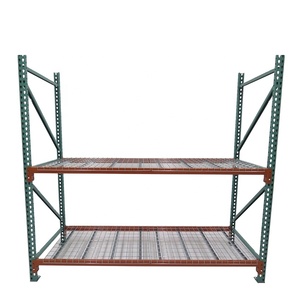
Heavy Duty CE Certificate Warehouse Storage Pallet Rack Teardrop & Structural Racks
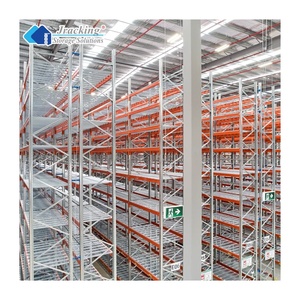
Compact Industrial Warehouse Steel Pallet Racking System for Cold Storage
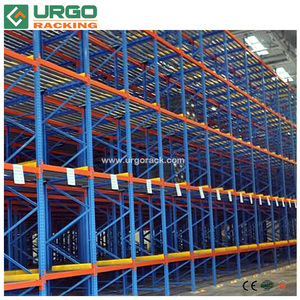
High Quality Industrial Rolling Shelves Stainless Steel Carton Flow Rack
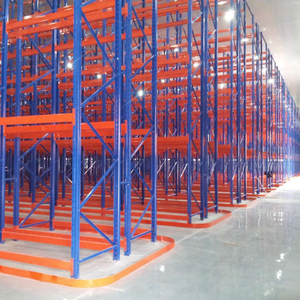
Very Narrow Aisle (VNA) Rack System with Seismic Resistant Structural Reinforcement
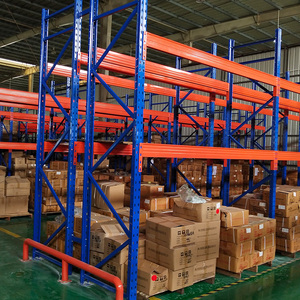
Heavy-Duty Gravity Live Rack & Narrow Aisle Storage Racking System (2500–4000 KG)
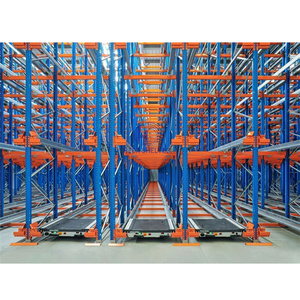
High-Density Radio Shuttle Rack System & Automated 4-Way Shuttle Racking
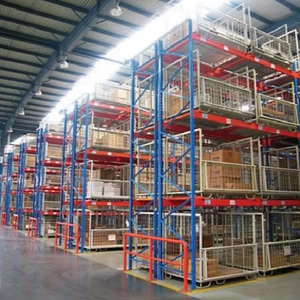
Heavy-Duty Powder-Coated Steel Pallet Rack with Customizable Load-Bearing Panels
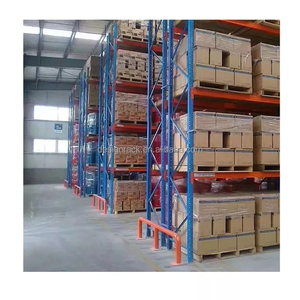
Industrial Factory Warehouse Rack 800KG Heavy Duty Boltless & Pallet Racking
1. Transitioning from Floor Block Stacking to Engineered Racking in Australia
For decades, logistics facilities and bulk goods storage operators across Sydney, Melbourne, Brisbane, and Perth relied on unassisted "floor block stacking"—stacking pallets directly on top of one another in deep lanes. While floor block stacking eliminates capital expenditure on steel racking infrastructure, its operational physics impose severe financial and safety penalties on modern Australian supply chains.
Traditional floor block stacking suffers from three structural constraints: honeycombing floor space loss, product crushing damage, and strict compliance risk under SafeWork Australia guidelines. When lower-tier pallets cannot bear the dynamic or static overhead payload of seasonal SKU replenishment, inventory deformation occurs. Furthermore, accessibility is strictly limited to Last-In, First-Out (LIFO) inventory control, trapping fast-moving consumer goods (FMCG) behind slower stock.
Honeycombing Waste
Unfilled stack lanes force Australian warehouses to operate at less than 60% volumetric utilization, wasting prime industrial real estate where land costs exceed AUD $250–$350 per square metre.
Bottom-Pallet Crush
Static stack weight deforms secondary packaging, corrugated cartons, and liquid containers, resulting in unrecoverable inventory write-offs during intermodal transit across interstate routes.
AS 4084 Structural Safety
Engineered block stacking racks, drive-in systems, and radio shuttle framework isolate stack loads, transferring vertical mass directly to structural steel columns secured into concrete foundations.
2. Engineering Compliance: Standard AS 4084:2023 & Australian Slab Specs
Importing industrial racking into Australia requires absolute alignment with AS 4084:2023 (Steel Storage Racking). Unlike US RMI or European FEM 10.2.02 standards alone, the Australian standard enforces stringent structural safety calculations, frame stability testing, impact allowances, and seismic compliance under AS 1170.4.
SolidFort Storage Equipment designs and manufactures high-density block stacking racking frames specifically engineered for the unique profile of the Australian Standard Pallet (1165mm x 1165mm / 46" x 46"). Standard overseas frames (often designed for 1200 x 1000mm or 1200 x 800mm Euro pallets) leave Australian pallets improperly supported on step beams, inducing uneven point loading and frame deflection.
| Engineering Parameter | Standard Import Racking (GMA / Euro) | SolidFort AS 4084:2023 Australia Spec | Operational Impact in Australia |
|---|---|---|---|
| Pallet Size Compatibility | 1200 x 1000 mm / 1200 x 800 mm | 1165 x 1165 mm (CHEP / Loscam AU) | Zero beam overhang overhang misalignment; perfect load distribution. |
| Upright Steel Grade | Standard Q235 Cold-Rolled Steel | High-Tensile Q355B / Structural Steel | Increased resistance to forklift impact & heavy load compression. |
| Seismic Factor (AS 1170.4) | Non-Seismic / Generic Coefficient | AU Zone Specific Anchoring & Bracing | Passes local council building permits and third-party engineering audits. |
| Baseplate Embedment | Standard M10 Expansion Bolts | M12–M16 Heavy Duty Mechanical/Chemical Anchors | Guarantees structural tie-down onto 150mm–250mm concrete slabs. |
| Safety Factor Margin | 1.40 Minimum | 1.50 to 1.65 Reinforced Margin | Prevents frame buckling under maximum rated block stack capacity. |
3. Localized Application Scenarios Across Australian Logistics Corridors
Australian geography demands robust supply chain logistics hubs operating across extreme temperature ranges—from cold storage facilities in Victoria to mining supply depots in Western Australia and humid distribution centers in Queensland.
Cold Storage & Fresh Produce
Locations: Melbourne (Dandenong, Laverton), Sydney (Western Sydney Aerotropolis), Adelaide.
Cold storage energy costs in Australia are amongst the highest globally. SolidFort Drive-In Racking and Radio Shuttle Systems maximize cubic space, allowing cold stores to pack up to 85% of their room volume, reducing ambient refrigeration loss per pallet.
Mining & Heavy Industrial Parts
Locations: Perth (Welshpool, Kwinana), Kalgoorlie, Mackay.
Heavy machinery spares, drill bits, and liquid chemical drums require structural block stacking frames capable of handling 2,500 kg to 4,000 kg per beam level. SolidFort custom-builds heavy teardrop and structural beam channels coated with anti-corrosive powder finishes.
Beverage & Wine Bottling Lines
Locations: South Australia (Barossa Valley, logistics nodes in Adelaide), Victoria (Yarra Valley logistics).
Palletized glass bottles and finished wine cartons cannot endure direct physical contact. Block stacking shuttle racks create high-density storage aisles where electric shuttles handle movement without forklift entry risk.
4. Australian Industrial Trends: Automation & High Real Estate Costs
The Australian industrial warehouse landscape is experiencing rapid structural changes. As prime logistics parks reach capacity, developers and 3PL operators are turning to high-density semi-automated and fully automated racking systems to drive operational ROI.
- Skyrocketing Industrial Land Values: Net warehouse rents across major Australian capital cities have surged by over 35% in recent years. Facilities can no longer afford wide 3.5-meter forklift aisles required by standard selective racking for bulk goods.
- Shift Towards Semi-Automated 4-Way Radio Shuttles: Replacing human-driven forklifts inside deep block lanes with battery-operated radio shuttles dramatically reduces rack damage, increases pallet throughput per hour, and ensures worker safety.
- Strict Occupational Health & Safety (OH&S) Enforcement: SafeWork Australia inspectors actively cite facilities relying on unstable floor block stacking. Transitioning to certified structural block racking eliminates compliance fines and insurance liability.
- Sustainable Steel & Durable Coatings: With coastal infrastructure exposed to salt air corrosion (e.g., Port Botany, Port Kembla, Brisbane Port), Australian buyers demand durable thermosetting powder coatings or hot-dip galvanizing on uprights and wire mesh decking.
5. Technical Comparison: Storage Systems for Bulk Goods
To help Australian warehouse managers, engineering consultants, and procurement directors select the optimal storage layout, the matrix below compares traditional floor stacking against engineered high-density systems manufactured by SolidFort.
| Storage System Type | Floor Space Utilization | SKU Versatility | Pallet Access Type | Risk of Stock Damage | Estimated ROI Period |
|---|---|---|---|---|---|
| Unassisted Floor Block Stacking | 35% – 50% (Poor) | Low (Bulk Only) | LIFO (Last-In, First-Out) | High (Carton Crushing) | Immediate (Zero CapEx) |
| SolidFort Drive-In Racking | 65% – 75% (High) | Medium | LIFO / FIFO Option | Very Low | 12 – 18 Months |
| SolidFort Radio Shuttle Racking | 80% – 90% (Maximum) | Medium to High | Automated FIFO / LIFO | Zero Impact Risk | 14 – 24 Months |
| SolidFort Very Narrow Aisle (VNA) | 70% – 80% (High) | 100% Selective | Direct Individual Access | Low (Guided Truck) | 18 – 30 Months |
| SolidFort Push-Back Cart Racking | 60% – 70% (Medium-High) | Medium (2–6 Deep) | LIFO Gravity Flow | Very Low | 12 – 20 Months |
6. Why Australian Importers & Enterprise Buyers Choose SolidFort
SolidFort Storage Equipment Co., Ltd. is a factory-direct manufacturer operating a state-of-the-art 30,000㎡ production complex in Xiamen, China. Operating since 2016, we bridge the gap between competitive direct factory pricing and rigorous Australian structural engineering compliance.
In-House Production & QC
We operate dedicated cold roll-forming lines, automated robotic welding cells, and continuous powder-coating systems under ISO 9001 certified quality controls, ensuring strict pitch precision and weld integrity.
Engineered CAD & LARC Support
Our structural engineering division provides full CAD warehouse layout drawings, frame load capacity calculations, and Load Application and Rack Configuration (LARC) drawings tailored for local Australian permits.
Container Shipping & Fast Lead Times
Standard racking components ship within 10 to 15 days. We supply custom container loading plans (CIF, FOB, DDP terms to Sydney, Melbourne, Brisbane, Fremantle ports) to maximize container volume and protect paint finish during ocean transport.
7. Frequently Asked Questions (FAQ) for Australian Procurement
How do SolidFort racking systems comply with AS 4084:2023 in Australia?
Our engineering team designs upright profiles, beam connections, baseplates, and row bracing in strict accordance with AS 4084:2023 design formulas. We perform FEA (Finite Element Analysis) structural simulation and provide full material test certificates (MTC) alongside LARC documentation required by Australian safety auditors.
What beam lengths are required for Australian Standard 1165mm x 1165mm pallets?
Unlike US pallets (40" x 48") or Euro pallets (1200 x 800mm), Australian standard pallets measure 1165 x 1165 mm. To store two Australian pallets per beam level with mandatory safety clearances, standard clear beam spans are sized at 2591mm or 2743mm, while frame depths are typically engineered to 1100mm for correct 32.5mm overhang front and back.
What slab thickness is required to anchor heavy-duty block racking?
For heavy-duty block stacking racks carrying 1,000 kg to 3,000 kg per pallet level, a minimum reinforced concrete slab thickness of 150mm to 200mm with a compressive strength of at least 25-30 MPa is typically recommended. We specify exact anchor embedment depths based on your building's structural slab data.
Can block stacking racks be installed in cold storage facilities (-25°C)?
Yes. SolidFort manufactures specialized cold-storage racking using low-temperature steel grades that maintain ductile toughness without brittle fracture. We apply premium electro-galvanized or hot-dip galvanized finishes, as well as specialized low-temp thermosetting powder coatings engineered for freezer environments.
What is the delivery time frame from factory order to Australian ports?
Standard order manufacturing takes approximately 10 to 15 days at our Xiamen plant. Ocean transit time from Xiamen to major Australian ports (Sydney, Melbourne, Brisbane) averages 12 to 18 days, making total lead time around 4 to 5 weeks from drawing sign-off to port arrival.
What is the cost difference between selective pallet rack and radio shuttle racking?
Selective pallet racking generally averages USD $45–$85 per pallet position (materials), offering 100% selectivity. High-density Radio Shuttle Racking ranges between USD $120–$220 per pallet position (including shuttle units), but offers up to 2x higher storage density and eliminates forklift travel aisles inside the rack matrix.
How do we initiate a factory-direct quote and CAD warehouse design?
Simply contact our engineering sales department with your warehouse floor plan, ceiling clear height, pallet dimensions (weight and stack height), and forklift specification. Our engineering team will return a customized 2D/3D CAD layout layout and formal quote within 24 hours.
Optimize Your Australian Warehouse Storage Space Today
Consult directly with SolidFort structural engineers to design an AS 4084 compliant high-density racking system. Get a free CAD layout, load capacity calculation, and factory-direct quotation within 24 hours.
Send an Inquiry