Recommended Heavy-Duty Cold Chain Storage Systems
Explore our certified cold storage racking configurations designed specifically for high-density frozen food logistics, pharmaceutical preservation, and sub-zero warehouse automation.
1. Cold Chain Infrastructure in Greater Seattle & Puget Sound: Technical Market Drivers
The Greater Seattle region—spanning key industrial fulfillment corridors such as the Kent Valley, Fife, Sumner, Tacoma, and Port of Seattle marine terminals—represents one of the most critical cold chain distribution nodes in North America. Serving as the primary gateway for Alaskan seafood imports, Pacific Northwest agricultural exports (tree fruit, berries, and dairy), and fast-growing regional biopharmaceutical networks, Seattle's sub-zero warehousing market requires specialized industrial infrastructure.
Operating a cold storage facility in the Pacific Northwest involves dealing with distinct physical, environmental, and regulatory challenges. Cold chain facility managers and logistics operators cannot simply deploy standard ambient pallet racking inside sub-zero freezers (-10°F to -25°F / -23°C to -31°C). Ambient steel structures operated under extreme thermal stress experience significant altered mechanical behavior, including thermal contraction, loss of steel ductility, condensation-induced corrosion, and frost-heave foundation slab dynamics.
Furthermore, local municipalities under the jurisdiction of the Seattle Department of Construction and Inspections (SDCI) enforce strict structural standards under the International Building Code (IBC) and ASCE 7 seismic guidelines. Because the Puget Sound region sits directly above the Cascadia Subduction Zone, cold chain storage systems must be engineered with custom frame geometry, specialized floor anchors, and ductility-certified steel profiles capable of handling high dynamic force loads during seismic events.
Information Gain Insight: Thermal Energy Conservation via High-Density Racking
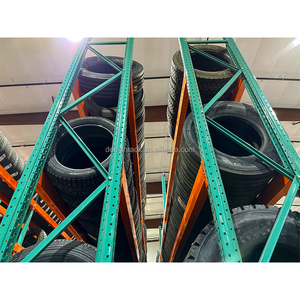
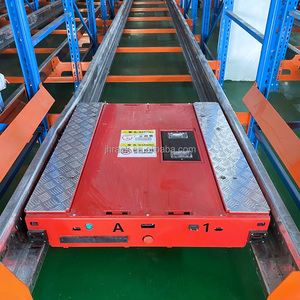
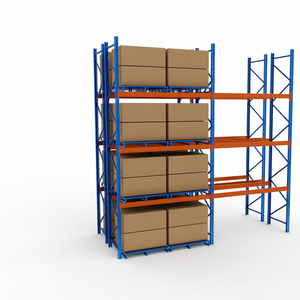
In Seattle's cold storage facilities, electricity costs required to refrigerate high-bay warehouses represent up to 60% of total operational expenditure (OpEx). Deploying low-density pallet racking creates excessive "dead air space," forcing refrigeration compressors to work harder. By upgrading from standard selective pallet racks to Semi-Automated Radio Shuttle Racking or Drive-In Racking Systems, storage density increases by 75% to 85% within the exact same structural envelope, drastically dropping refrigeration cost per pallet position.
2. Structural Metallurgy & Engineering Principles for Low-Temperature Racking
When structural steel is exposed to temperatures below freezing, it undergoes a transformation known as the Ductile-to-Brittle Transition (DBTT). Ordinary structural steel grades can become vulnerable to brittle fracture under heavy forklift impacts if the steel chemistry and cold-rolling processes are not optimized for sub-zero operation.
Metallurgical Grade Selection: Q235B vs. Q355B vs. EN 10025 Steel Alloys
SolidFort manufactures cold chain pallet racking utilizing structural steel (such as high-tensile Q235B, Q355B, and European Standard S355JR equivalent alloys) tested specifically for impact toughness at sub-zero thresholds. Charpy V-Notch impact testing ensures that upright frames and load beams maintain structural elastic deformation properties rather than snapping upon impact at temperatures down to -30°C.
| Steel Grade Standard | Yield Strength ($R_{eH}$) | Tensile Strength ($R_m$) | Charpy V-Notch Impact Test | Optimal Cold Chain Application |
|---|---|---|---|---|
| Q235B (ASTM A36 Equiv.) | $\ge 235$ MPa | 370–500 MPa | $+20^\circ\text{C} \ge 27\text{ J}$ | Chill Rooms ($0^\circ\text{C}$ to $+4^\circ\text{C}$) & Light Ambient |
| Q355B / Q355D (S355JR/J2) | $\ge 355$ MPa | 470–630 MPa | $-20^\circ\text{C} \text{ to } -30^\circ\text{C} \ge 34\text{ J}$ | Deep Freezers ($-18^\circ\text{C}$ to $-30^\circ\text{C}$) & Heavy Loads |
| Hot-Dip Galvanized S350GD | $\ge 350$ MPa | $\ge 420$ MPa | High Ductility Pre-Galv. | High Humidity & Wash-down Fish/Seafood Freezers |
Surface Finishes: Hot-Dip Galvanized (HDG) vs. Cold-Room Epoxy Powder Coating
Preventing corrosion in cold storage environments requires a dual-pronged engineering approach due to continuous condensation during defrost cycles:
- Hot-Dip Galvanizing (ISO 1461 Compliant): Ideal for seafood distribution facilities in Seattle (e.g., Ballard and Port of Seattle terminals) where saline air and wet wash-down cycles occur. Steel components are immersed in molten zinc, forming an iron-zinc alloy coating (minimum 60–85 $\mu$m thickness) that delivers complete self-healing sacrificial corrosion protection.
- Sub-Zero Electrostatic Powder Coating: Applied using pure polyester or epoxy-polyester powder resins cured at high temperatures. The formulation includes specialized plasticizers that resist micro-cracking, flaking, or thermal embrittlement when transitioning between ambient staging areas and sub-zero storage rooms.
3. Seattle Structural & Seismic Permit Requirements (SDCI & ANSI/RMI MH16.1)
Installing industrial storage racks in Seattle requires obtaining structural building permits from the Seattle Department of Construction and Inspections (SDCI). Under the Seattle Building Code (SBC), pallet racks higher than 8 feet are classified as steel storage structures and must withstand significant seismic acceleration forces calculated under ASCE 7 (Minimum Design Loads for Buildings and Other Structures).
Seismic Design Categories (SDC D to F)
Greater Seattle is classified under high Seismic Design Categories. Structural calculations account for high spectral response accelerations ($S_s \approx 1.25g - 1.50g$), requiring wider baseplates, heavy-duty footings, and dynamic load factors.
RMI & AS4084 Structural Calculations
SolidFort provides comprehensive engineering calculation packages. Structural designs comply with ANSI MH16.1 (RMI), FEM 10.2.02, and AS4084 standards, simplifying PE (Professional Engineer) stamp approval in Washington State.
Cold Room Slab Anchor Protection
Sub-zero concrete floors feature sub-slab insulation and heating ventilation ducts to prevent frost heave. Our seismic anchor embedding depths are carefully designed to avoid puncturing vapour barriers or insulation layers.
4. Comparative Evaluation: Selecting the Right Cold Storage Racking Architecture
Choosing the optimal pallet racking system depends on your facility's SKU diversity, inventory management method (FIFO vs. LIFO), throughput speed, and total operational footprint.
| Racking System Type | Storage Density | SKU Access / Selectivity | Inventory Flow | Cold Storage Efficiency | Relative Cost per Pallet |
|---|---|---|---|---|---|
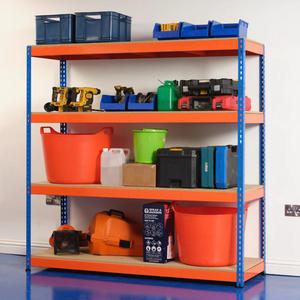
| Selective Pallet Racking | Moderate (60%) | 100% Immediate Access | FIFO / LIFO | Standard | $ (Lowest Initial Cost) |
| Drive-In / Drive-Thru Racking | High (80-85%) | Low (Block Storage) | LIFO (Drive-In) / FIFO | High Density / Lower Energy | $$ (Cost Effective) |
| Radio Shuttle Automated Racking | Ultra-High (85-90%) | Programmed Channel Selectivity | Automated FIFO / LIFO | Maximum Energy Conservation | $$$ (High ROI in Freezers) |
| Push-Back Rack (2-6 Deep) | High (75%) | Medium per Lane | Strict LIFO | Optimized for Medium SKUs | $$$ (Mid-High Range) |
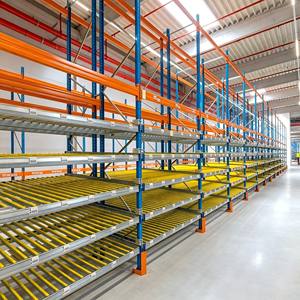
| Gravity Carton Flow Racking | High (Cartons) | 100% Face Pick Access | Strict FIFO | Ideal for Split-Case Cold Pick | $$ (Specialized Picking) |
5. Specialized Application Scenarios Across Seattle's Commercial Sectors
Our engineered cold storage rack systems directly support key local industries throughout King, Snohomish, and Pierce counties:
Scenario A: Alaskan Seafood Marine Terminals (Port of Seattle & Tacoma)
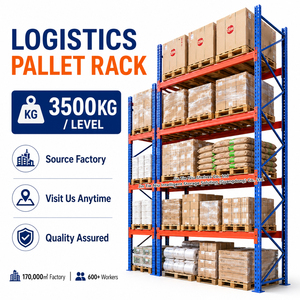
Processing wild salmon, halibut, and crab requires rapid blast freezing down to -30°C. Heavy-duty Hot-Dip Galvanized Beam Racks with 3500kg load capacities prevent saltwater oxidation while facilitating heavy timber and plastic bulk tote storage.
Scenario B: Agriculture & Berry Storage (Kent Valley & Skagit Valley)
Harvest surges of organic berries, apples, and dairy products demand seasonal high-density storage. Drive-In Racking enables high-volume pallet stacking with customized top and back ties to maintain alignment on insulated concrete floors.
Scenario C: E-Commerce Grocery & Biopharma (South Lake Union / Bothell Hubs)
Fast order picking for temperature-sensitive pharmaceuticals and online grocery delivery utilizes Radio Shuttle Systems paired with Carton Flow Racks. Integrated LED pick-to-light arrays accelerate FIFO order execution in 2°C to 4°C cleanroom vaults.
6. SolidFort Enterprise Advantages & International Certification Standards
SolidFort Storage Equipment Co., Ltd. operates a state-of-the-art 30,000㎡ manufacturing plant in Xiamen, exporting engineered rack systems to more than 53 countries worldwide. We serve as a direct factory source eliminating intermediary markups for Seattle importers, logistics developers, and engineering contractors.
CE & EN 1090 Certified
Factory Production Control certified under EN 1090-1 execution class, ensuring strict welding quality and steel traceability.
Automated Roll-Forming
CNC cold-roll forming lines produce precise upright profiles (80/90/100/120mm widths) with consistent pitch hole punching.
In-House Mechanical QC
Every steel batch undergoes yield strength testing, weld ultrasonic inspection, and salt-spray corrosion chamber verification.
Container Shipping to Seattle
Factory direct shipments to the Port of Seattle / Tacoma within 10–15 days standard production lead time on FOB, CIF, or DDP terms.