Navigating Heavy-Duty Industrial Racking Requirements in South Africa
South Africa stands as the primary logistics and industrial distribution powerhouse of Sub-Saharan Africa. From the dense logistics corridors of Gauteng (Johannesburg, Midrand, and Ekurhuleni) to coastal supply chain hubs in Durban (eThekwini) and Cape Town, enterprise demand for optimized vertical warehouse capacity has intensified. However, specifying industrial storage shelving and heavy-duty pallet racking in South Africa presents distinct engineering, structural, and environmental challenges that foreign buyers must navigate with precision.
As a premier factory-direct China pallet racking manufacturer, SolidFort Storage Equipment Co., Ltd. bridge the gap between high-precision Chinese structural manufacturing and South Africa’s rigorous warehouse operational standards. Designing a high-bay rack system for a South African facility requires moving beyond baseline product metrics to analyze local floor slab structural capacities, SANS structural design norms, coastal atmospheric corrosion levels, and operational power grid realities.
Key Technical Insight for SA Warehouse Operators
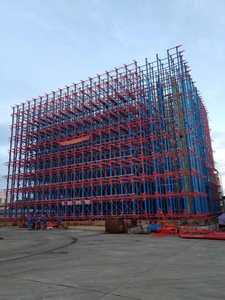
Due to high logistics land costs in Gauteng and KZN, modern facilities are expanding vertically (up to 12m–15m clear heights). Achieving structural safety at these heights demands high-tensile cold-rolled steel profiles (Q355B equivalent to Grade 350JR) with precise beam-to-upright locking mechanisms that eliminate structural sway under dynamic forklift load impacts.
Engineering Standards & Structural Integrity: SANS 10160 vs International Guidelines
When importing industrial storage shelving from China to South Africa, compliance with local structural codes is non-negotiable for obtaining municipal occupation certificates and structural safety approvals. The South African National Standard SANS 10160 (Basis of structural design and actions for buildings and industrial structures) governs how load actions, wind loads, and seismic zones (particularly relevant in parts of the Western Cape) are calculated.
SolidFort engineers design racking systems using global benchmarks including AS4084-2012 (Australian Standard for Steel Storage Racking), RMI (ANSI MH16.1), and FEM 10.2.02 (European Code). These standards align smoothly with SANS requirements because they strictly enforce:
- Structural Deflection Limits: Horizontal beam deflection under maximum uniformly distributed load (UDL) is constrained to L/200, preventing beam sagging and pallet slippage.
- Frame Buckling Resistance: Upright cold-rolled omega profiles feature continuous ribbed geometry to maximize the moment of inertia, resisting torsional buckling under eccentric loading.
- Seismic Anchoring: In seismic-susceptible regions around Cape Town and Ceres, base plates and heavy-duty chemical anchors are engineered to resist lateral shear forces.
System Selection Matrix for South African Industrial Sectors
Selecting the optimal shelving or racking configuration requires balancing SKU turnover speed against volumetric space efficiency. Below is an engineering comparison matrix designed for local logistics managers:
| Racking System | Space Utilization | Selectivity | Optimal SA Industry Application | Load Shedding Impact |
|---|---|---|---|---|
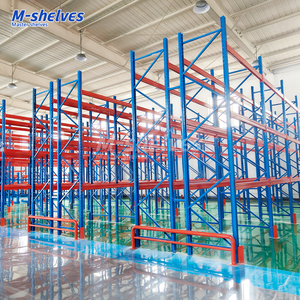
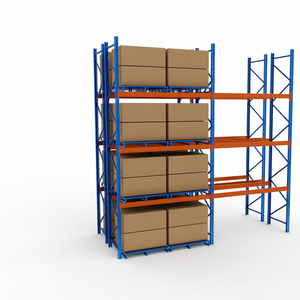
| Selective Pallet Racking | 40% - 50% | 100% (Direct Access) | 3PL Logistics, Retail Distribution (Joburg/Durban), FMCG | Zero (100% Manual/Forklift) |
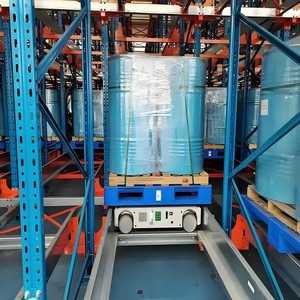
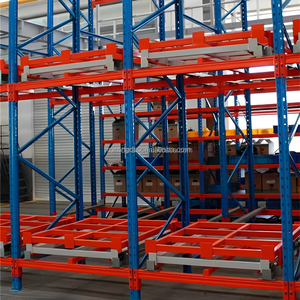
| Radio 4-Way Shuttle Racking | 80% - 90% | Low - Medium (Batch) | Cold Storage (Cape Town agri-export), Beverage Warehouses | Low (Built-in LiFePO4 battery backups) |
| Drive-In / Drive-Thru Racking | 65% - 75% | Low (LIFO / FIFO) | Seasonal Agricultural Storage, High-Volume Raw Materials | Zero (Forklift driven) |
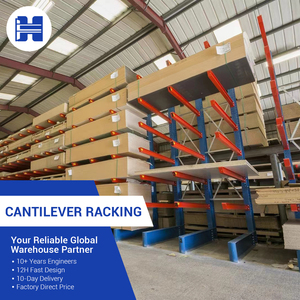
| Heavy Duty Cantilever Rack | 60% - 70% | 100% for Long Loads | Steel Merchants, Timber, PVC Piping Distribution (KZN/Gauteng) | Zero (Manual/Forklift) |
Localized Application Scenarios Across South African Economic Hubs
1. Cold Storage & Agricultural Export (Western Cape & Eastern Cape)
South Africa’s citrus, table grape, and wine export sectors depend heavily on temperature-controlled logistics. Cold storage operations in Cape Town and Gqeberha (Port Elizabeth) face extreme operating costs per cubic meter. High-density Radio Shuttle Racking and Push Back Racking are primary choices here. By removing operating aisles, energy loss is minimized while maximizing pallet storage density. SolidFort's cold-room storage systems utilize special low-temperature polyester powder coatings rated down to -30°C to prevent coating embrittlement and micro-cracking.
2. High-Throughput 3PL & FMCG Distribution Centers (Gauteng)
The Gauteng province serves as the central inland port and logistics hub for SADC trade. Distribution centers in Midrand, City Deep, and Linbro Park manage tens of thousands of active SKUs. Here, Selective Pallet Racking combined with wire mesh decking remains the dominant architecture. Direct access to every pallet ensures rapid order picking and smooth integration with Warehouse Management Systems (WMS).
3. Coastal Heavy Industrial & Pipe/Steel Storage (KwaZulu-Natal)
Industrial operations in Durban and Richards Bay deal extensively with raw materials, structural steel, aluminum extrusions, and heavy automotive manufacturing parts for the Durban port corridor. Standard pallet racks cannot accommodate non-standard linear profiles. SolidFort’s Heavy Duty Cantilever Racking featuring adjustable arms (carrying up to 1,500kg per arm) provides open-front loading flexibility without structural front columns.
Coastal Corrosion Mitigation (Durban & Cape Town Coastal Regions)
Atmospheric salinity in coastal KZN (ISO 12944 Corrosivity Category C4/C5) can cause rapid iron oxidation on standard painted steel within 24 months. SolidFort supplies specialized Hot-Dip Galvanized (HDG) uprights and beams with zinc coating thickness between 65µm–85µm, delivering 25+ years of maintenance-free service life in coastal environments.
Emerging Trends: Adapting Storage Infrastructure to SA Energy Realities
Over the past decade, South African warehouse management has adapted to power grid instability (Eskom load shedding). This operational reality directly influences automated warehouse selection. While fully integrated AS/RS crane systems demand continuous, high-wattage power, modular Radio Shuttle Systems have gained widespread traction. Modern shuttle runners feature quick-charging Lithium Iron Phosphate (LiFePO4) batteries capable of 8 to 10 hours of continuous operation on a single 1-hour charge—allowing warehouses to maintain operational throughput uninterrupted during power outages using basic solar or inverter systems.