High-Density & Industrial Storage Racking Solutions
Engineered for high load capacity, optimum cubic utilization, and seamless operation with FIN (1000×1200mm) and EUR (800×1200mm) pallet configurations across Finland.
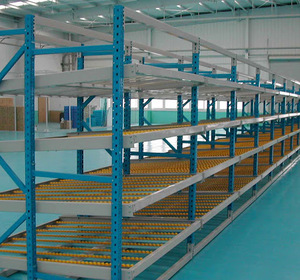
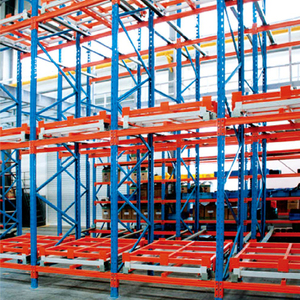
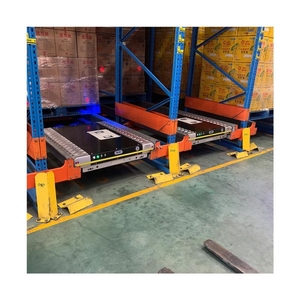
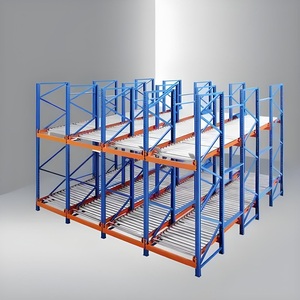
Deep Lane Pallet Racking Architecture in Finland's Logistics Ecosystem
An in-depth analysis of structural integrity, volumetric efficiency, and cold-room resilience for Finnish logistics managers and warehouse engineers.
Structural Engineering & SFS-EN Compliance Standards
Modern industrial warehousing in Finland—spanning primary logistics nodes in Helsinki, Vantaa, Tampere, Turku, and Oulu—demands structural steel systems engineered to rigorous European criteria. SolidFort’s deep lane racking range is calculated in strict compliance with EN 15512 (European Standard for Steel Static Storage Systems), incorporating structural parameters specified by FEM 10.2.02 and RMI (ANSI MH16.1) standards.
Unlike standard selective rack configurations, deep lane racking systems (such as Radio Shuttle, Drive-In, Push-Back, and Gravity Flow) experience unique dynamic force vectors, eccentric loads during shuttle acceleration, and torsional strain across multi-pallet depth channels. Our structural designers utilize high-tensile structural steel (minimum grade S355JR / Q355B), ensuring deflection ratios remain strictly within L/200 under full operational capacity.
For Finnish enterprises handling heavy forest products, machinery spares, cold-chain food supplies, and fast-moving consumer goods (FMCG), engineering precision prevents column buckling, connection beam fatigue, and frame distortion during high-throughput cycles.
Optimizing for Finnish Pallet Standards: FIN vs. EUR Dimensional Geometry
Designing high-density deep lane systems specifically for the Finnish market requires precise accommodation of local pallet geometry. While continental Europe relies heavily on the standard EUR-pallet (800 mm × 1200 mm), Finnish logistics operators frequently utilize the wider FIN-pallet (1000 mm × 1200 mm), alongside industrial chep pallets.
Deep lane systems must be custom-engineered to accommodate these dimensional variations without sacrificing lane density or safety clearances:
- FIN-Pallet Channel Customization: Upright frame depths and guide-rail widths are custom-sized to maintain a minimum 75 mm side clearance, mitigating risk of pallet binding or shuttle sensor misalignments.
- Dual-Pallet Capability: SolidFort radio shuttle rails and push-back cart profiles feature multi-point sensing edges and wider support flanges, allowing seamless automated transport of both FIN and EUR pallets within the same structural bay.
- Flue Space Integrity: In accordance with Finnish safety and fire protection regulations (Pelastuslaitos standards), deep lane designs preserve clear vertical flue channels to facilitate automatic sprinkler water penetration across deep storage runs.
Information Gain: Mechanical Resilience in Sub-Zero Cold-Chain Environments (-30°C)
A critical consideration for Finnish logistics operators is cold-room performance. Standard structural steel undergoes a ductile-to-brittle transition when exposed to sub-zero temperatures typical of Finnish frozen food storage facilities (-25°C to -30°C). Standard carbon steel exhibits micro-cracking and brittle fracture failure under shock impacts from forklifts or shuttle docking.
SolidFort's Cold-Engineering Solution: We supply specialized low-temperature structural steel tested via Charpy V-Notch Impact Testing at -30°C (guaranteeing minimum impact energy absorbing values above 27 Joules). Furthermore, all structural components feature specialized low-temperature electrostatic epoxy powder coating or hot-dip galvanization compliant with ISO 1461, preventing zinc flaking, condensation micro-corrosion, and structural degradation caused by thermal contraction cycles.
Selecting the Right Deep Storage System for Your Facility
A comparative overview of core high-density racking topologies tailored for Finnish industrial operations.
Radio Shuttle Pallet Racking (Semi-Automated)
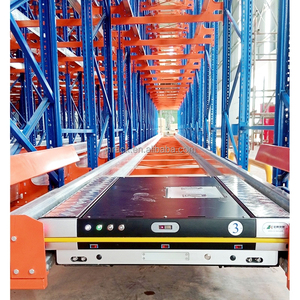
Utilizes self-powered radio-controlled shuttles to transport pallets along specialized internal rails up to 40+ pallets deep. Offers flexible switching between LIFO (Last-In, First-Out) and FIFO (First-In, First-Out) logic.
Primary Finland Applications: Central cold storage distribution centers, beverage bottling plants, dairy operations (e.g., Valio logistics pipelines), high-volume FMCG warehouses.
Density Efficiency: 85% volumetric utilization. Reduces forklift driving time inside channels by up to 70%.
Push-Back Nested Cart Racking (2–6 Pallets Deep)
Features inclined structural rails fitted with nested rolling steel carts. As a forklift loads a new pallet, it gently pushes the preceding pallet back. When unloading, gravity feeds remaining pallets forward.
Primary Finland Applications: Medium-turnover warehouses, manufacturing buffer zones, automotive parts logistics, facilities requiring fast selectivity across multiple aisles.
Density Efficiency: 75% volumetric utilization. 100% dedicated access per lane level with zero internal driver hazards.
Drive-In / Drive-Thru Pallet Racking
Allows forklifts to drive directly into continuous storage channels to deposit pallets onto continuous side support cantilever rails. Ideal for large batches of uniform SKUs.
Primary Finland Applications: Raw material reserves, paper and pulp reel storage, seasonal agricultural harvest storage, industrial chemical stock.
Density Efficiency: 80% volumetric utilization. Highly cost-effective material outlay per pallet position.
Deep Lane System Selection & Performance Metrics
Evaluate key architectural parameters across high-density storage technologies to determine optimal ROI for your site.
| Racking Technology | Storage Density | Inventory Flow Logic | FIN / EUR Pallet Adaptability | Sub-Zero Efficiency (-30°C) | Forklift Damage Risk | Recommended Action |
|---|---|---|---|---|---|---|
| Radio Shuttle Racking | Very High (>85%) | LIFO or FIFO | Excellent (Custom Rail Widths) | Exceptional (Lithium-Iron Batteries) | Extremely Low (External Operation) | Send an Inquiry |
| Push-Back Cart System | High (70–78%) | LIFO Only | High (Nested Heavy-Duty Carts) | Good (Cold-Resistant Bearings) | Low (Driver remains in aisle) | Send an Inquiry |
| Drive-In Pallet Racking | High (75–82%) | LIFO Only | Moderate (Requires precise driving) | Moderate (Structural clearance vital) | Moderate-High (Forklifts enter lane) | Send an Inquiry |
| Pallet Flow (Gravity Roller) | Very High (>85%) | Strict FIFO | High (Requires speed controllers) | Good (Specialized brake rollers) | Low (External loading/unloading) | Send an Inquiry |
| Double-Deep Selective | Moderate (60–65%) | LIFO | Excellent (Standard beam layout) | Excellent (Simple structure) | Low-Moderate (Pantascope reach truck) | Send an Inquiry |
Key Drivers Shaping Warehouse Automation & Storage in Finland
Understanding environmental, economic, and technological forces across the Nordic industrial landscape.
1. Soaring Industrial Heating & Energy Costs in Cold Climates
Operating industrial real estate in Finland involves substantial climate-control expenditures during winter months. Heating large warehouse volumes—or conversely, maintaining sub-zero temperatures in cold storage facilities—represents a dominant operational expense.
The Deep Lane Advantage: By transitioning from standard selective racking (which utilizes up to 60% of floor space for forklift aisles) to high-density Deep Lane Radio Shuttle or Push-Back racking, companies double their pallet capacity within the exact same building footprint. Compressing storage volume drastically lowers energy usage per pallet position, aligning with Finland’s national goal of carbon-neutral industrial logistics.
2. High Nordic Labor Costs & Automation Migration
Finland’s logistics sector features high average hourly labor costs. Warehouse operators face mounting pressures to increase throughput per man-hour while minimizing workplace injuries and equipment fatigue.
Semi-automated deep lane systems, particularly Radio Shuttle Racking, optimize forklift driver efficiency by up to 50%. Instead of driving deep into dark racking channels, operators remain comfortably in the main aisle, loading and retrieving pallets at the entry face while radio shuttles perform internal channel movements automatically.
3. Expansion of Logistics Corridors (Kehä III & E18 Highway)
Major distribution centers are increasingly concentrated along the Kehä III (Ring III) corridor, Vantaa airport district, Tampere Highway (E12), and Kotka/Hamina port connections. Land prices in prime logistics parks necessitate vertical space optimization.
SolidFort supplies custom upright frame heights exceeding 12 meters, allowing Finnish facilities to utilize clear ceiling heights fully while satisfying local structural slab load limits (kN/m²) through engineered footplate load distribution.
4. ESG & Sustainable Steel Procurement
Finnish corporate buyers prioritize environmental transparency, responsible raw material sourcing, and ISO 14001 environmental management certification. SolidFort utilizes eco-friendly powder coating lines with zero VOC emissions and recyclable high-strength steel profiles, delivering verifiable sustainability metrics for your corporate ESG audits.
Factory-Direct Manufacturing Excellence & Engineering Trust
SolidFort Storage Equipment Co., Ltd. brings over a decade of specialized industrial racking engineering to global supply chains.
30,000 m² Advanced Production Hub
Located in Tongan District, Xiamen, China, our manufacturing facility houses continuous cold-roll forming lines, robotic welding stations, laser beam cutting equipment, and automated Swiss-technology powder coating lines.
Certified International Compliance
Every beam, upright frame, and connector bracket is designed and audited against AS4084, RMI (ANSI MH16.1), FEM 10.2.02, and EN 15512 standards, backed by full material test reports (MTR) and ISO 9001 quality management certificates.
Complete Engineering & Export Services
We provide free initial CAD floorplan layouts, static load calculation reports, LARC drawings, sample component delivery, and export packaging optimized for ocean container shipping directly to Helsinki, Vuosaari, or Kotka ports.
5-Step Engineer-Led Execution Workflow
01. Requirement Analysis
Evaluation of slab capacity, pallet dimensions (FIN/EUR), forklift reach, clear ceiling height, and cold-room thermal profiles.
02. CAD & Structural Design
2D/3D CAD layouts, storage density optimization calculations, and EN 15512 static load calculations.
03. Precision Production
Automated roll-forming, robotic welding, shot-blasting, and chemical-resistant powder coat curing.
04. Export Logistics
Bundled steel strapping, protective edge wrapping, container loading plans, and DDP/FOB/CIF door delivery.
05. Installation Support
Detailed assembly manuals, anchor bolt torque charts, video walkthroughs, and optional remote technical supervision.
Frequently Asked Questions: Deep Lane Racking in Finland
Expert answers addressing floor anchoring, building permits, temperature resistance, and logistics.
Our deep lane systems are tailored around your specific inventory ratio. For Radio Shuttle systems, shuttle rails feature adjustable width settings or dual-flange guidance tracks that safely carry 1000mm wide FIN pallets and 800mm wide EUR pallets without manual rail adjustment. For Drive-In and Push-Back configurations, support arm clearances and cart deck widths are custom-dimensioned during the initial CAD engineering phase to prevent pallet overhang or binding risks.
Under European standards (EN 15512), upright columns must be securely anchored to the structural slab using heavy-duty chemical or mechanical expansion anchors. For standard selective or deep lane racking, a minimum concrete slab thickness of 150 mm to 200 mm with a compressive strength of C20/25 or C25/30 is required. In cold room applications featuring insulated floor slabs, specialized thermal-break anchor sleeves or chemical anchors designed for sub-zero curing are utilized to prevent frost heave and moisture infiltration.
Yes. SolidFort supplies cold-chain specialized radio shuttle cars equipped with internal thermal management systems, IP65-rated moisture-sealed electrical components, and cold-weather Lithium-Iron-Phosphate (LiFePO4) battery packs. These batteries feature built-in heating elements that prevent voltage drops and maintain full operational duty cycles (up to 8–10 continuous hours) even in environments down to -30°C.
We utilize high-yield structural steel (grade S355JR / Q355B or S355J2 for sub-zero impact toughness). Upright frames and beams receive an automated multi-stage chemical wash, phosphate conversion, and electrostatic epoxy powder coating cured at 200°C. For extreme humidity, fish-processing facilities, or outdoor covered storage, we offer Hot-Dip Galvanization in accordance with ISO 1461, delivering a durable zinc coating thickness of 60–80 microns.
Standard manufacturing lead time is 10 to 15 days upon final CAD drawing approval. Engineered custom projects (such as large radio shuttle installations) typically require 25 to 30 days. Ocean freight shipments depart directly from Xiamen Port to major Finnish maritime hubs, including Helsinki (Vuosaari Port), Kotka, and Turku, with a typical transit time of 30 to 38 days depending on the shipping line service selected. We provide full container load (FCL) packing plans to maximize container space utilization.
Every installation includes high-visibility aluminum or heavy-duty vinyl Load Application and Rack Configuration (LARC) safety plaques compliant with EN 15635 standards. These plaques clearly display maximum allowable beam pair loads, bay capacities, upright spacing, and inspection schedules required by local Finnish occupational health and safety inspectors (Työsuojelu).
Ready to Maximize Your Warehouse Storage Density in Finland?
Get in touch with SolidFort's engineering team today for a complimentary CAD layout analysis, structural load calculation, and factory-direct price quotation.