Industrial White Paper: High-Density Drive-In Racking Systems in Greater Chicago
As the undisputed logistics backbone of the American Midwest, Greater Chicago represents over 1.2 billion square feet of industrial warehouse inventory across prime logistics hubs including Elk Grove Village, O'Hare Submarket, Joliet/Bolingbrook (I-80 corridor), and Logistics Park Chicago in Elwood. With Class A industrial real estate lease rates climbing to historical highs ($9.00–$14.50/sq. ft. NNN) alongside escalating Cook County property taxes, logistics managers, 3PL operators, and cold-storage directors face an unprecedented margin squeeze. Minimizing warehouse footprint while doubling pallet storage density is no longer merely an operational preference—it is a financial imperative.
A Drive-In Racking System engineered by SolidFort Storage Equipment represents the highest structural efficiency threshold for bulk inventory management. By eliminating operational access aisles required by conventional selective racking, Drive-In configurations convert up to 85% of dormant floor space into active, revenue-generating pallet storage positions. SolidFort serves Chicagoland warehouse developers and distributors by providing direct factory-engineered high-density storage systems manufactured under ISO quality protocols and rigorously verified against North American RMI (ANSI MH16.1) structural standards.
In high-density industrial corridors near Chicago O'Hare International Airport (ORD), a 50,000 sq. ft. warehouse utilizing conventional selective racking typically accommodates ~3,500 pallet positions at 100% aisle clearance. By replacing selective aisles with a 6-deep by 5-high SolidFort Drive-In Racking layout, the identical physical footprint expands capacity to 6,800+ pallet positions. At an average annual facility carrying cost of $12/sq. ft., this configuration saves Chicagoland operators over $180,000 annually in real estate expansion overhead while deferring expensive facility relocation.
Structural Architecture & Component Engineering
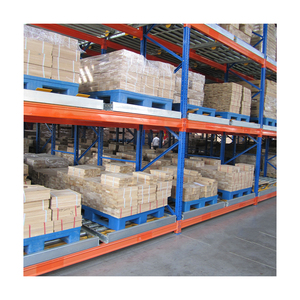
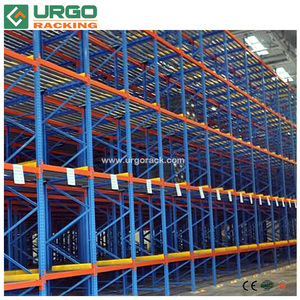
Drive-In racking is a Last-In, First-Out (LIFO) storage structure where forklifts drive directly into the racking bays to deposit or retrieve pallets supported on continuous cantilevered rails. Unlike standard beam-supported racks, Drive-In systems experience significant lateral dynamic thrusts during forklift entry and egress. SolidFort engineers every rack system using heavy-duty Q235B and Q355B cold-rolled steel, featuring custom structural tie-beams and top horizontal bracing networks to absorb impact vectors.
1. Continuous Pallet Support Rails
Formed from heavy-gauge structural steel profiles (up to 3.0mm thickness), SolidFort pallet rails incorporate a tapered entry flange and rolled safety edge. This design guides forklift driver tines smoothly into the tunnel while preventing pallet snagging under maximum capacity loading (up to 3,300 lbs / 1,500 kg per pallet position).
2. Heavy-Duty Upright Frames
Upright posts are roll-formed with a continuous 80mm to 120mm frontal profile featuring multi-claws connection brackets. Frame columns are anchored into reinforced concrete slabs via anchor bolts engineered specifically to withstand seismic force distributions mapped to Illinois USGS fault lines.
Engineering Comparison: High-Density Systems Matrix
Selecting the correct warehouse storage system requires balancing SKU velocity, pallet selectivity, ceiling clearance height, and initial capital expenditure per pallet position. Below is an engineering comparison compiled by SolidFort’s technical division:
| Storage System Type | Cubic Density | Selectivity (%) | Inventory Flow | Est. Material Cost / Pallet | Ideal Application Scenario |
|---|---|---|---|---|---|
| SolidFort Drive-In Racking | Very High (75%-85%) | 15% - 20% | LIFO (Last-In, First-Out) | $100 - $180 | Bulk homogeneous items, Cold Storage, FMCG, Beverage |
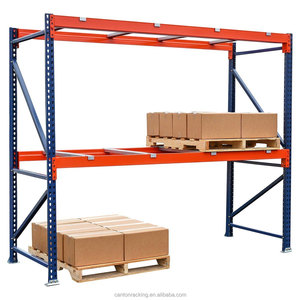
| Selective Pallet Racking | Standard (40%-50%) | 100% Direct Access | FIFO or LIFO | $50 - $100 | High SKU count, E-Commerce order picking, retail distribution |
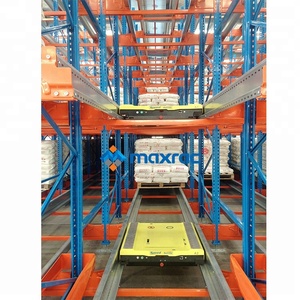
| Radio Shuttle Racking | Ultra High (80%-90%) | 20% - 30% | FIFO / LIFO (Automated) | $180 - $300 | Automated cold chains, deep lane storage without forklift entry |
| Push-Back Rack System | High (65%-75%) | 25% - 40% | LIFO (Nested Carts) | $140 - $240 | 2-to-6 deep pallet storage with aisle-facing loading |
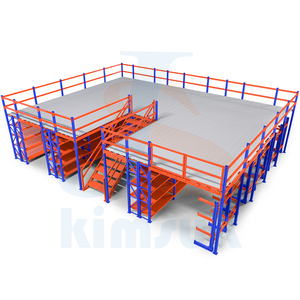
| Supported Mezzanine Floor | Vertical Doubling | 100% Floor Access | Flexible Access | Custom Layout | Multi-tier manual parts pick, archives, manufacturing lofts |
Localized Application Scenarios in Chicagoland
1. Sub-Zero Cold Storage & Food Distribution Hubs
Greater Chicago is home to one of the largest food processing and cold chain storage clusters in North America, stretching from historical Fulton Market redevelopment zones out to modern facilities in Cicero, Melrose Park, and Bedford Park. Maintaining sub-zero environments (-10°F to -20°F) incurs extraordinary electrical utility costs. SolidFort Drive-In Racking eliminates unnecessary aisles, allowing refrigerated storage facilities to condense air volume and maximize refrigerated storage density. Our frames are finished with hot-dip galvanizing or high-durability thermosetting epoxy powder coatings that resist thermal shock and moisture condensation without peeling or corroding.
2. Intermodal Freight Forwarding (Joliet & Elwood Rail Terminals)
With the Union Pacific (UP) and BNSF intermodal rail yards operating in CenterPoint Intermodal Center (Joliet/Elwood), millions of TEU containers pass through Chicagoland annually. Freight forwarders handling mass imports of single-SKU goods (automotive parts, raw materials, bulk consumer packaged goods) require dense staging areas for imported pallets before cross-dock distribution. Drive-In racking allows 3PL providers to store 10 to 15 pallets deep per tunnel, organizing inventory strictly by rail container lot or Bill of Lading (BOL).
3. Beverage Bottling & Seasonal Storage (I-55 Corridor)
Beverage manufacturers located along the I-55 corridor experience massive seasonal demand spikes around summer months and holiday surges. Storing thousands of identical pallets of aluminum cans, bottled water, or spirits requires high load-bearing capacity. SolidFort Drive-In racks are custom engineered with heavy-duty column protectors, structural rub rails, and floor-anchored guide tracks that prevent forklift mast collision, ensuring uninterrupted 24/7 high-velocity operational safety.
All storage structures installed in the City of Chicago must strictly align with Chicago Building Code Title 14B alongside International Building Code (IBC 2021) guidelines. SolidFort supplies structural calculations verifying anchor bolt embedment depth, slab loading capacity (PSI limits), and seismic design considerations (Seismic Design Category B/C in northern Illinois). Detailed engineering submittals are provided to support local building permit approvals.
Why Chicago Enterprise Buyers Partner with SolidFort
30,000㎡ ISO-Certified Manufacturing Plant
SolidFort operates a state-of-the-art 30,000 square meter manufacturing plant equipped with continuous automated cold roll-forming lines, robotic arm welding stations, and an automated Swiss-Gema powder coating line. By purchasing factory-direct, Chicago buyers bypass multiple intermediary dealer markups while maintaining total design customization over steel thickness, beam profiles, and frame dimensions.
Engineered to International Standards
Our storage racking systems are engineered in reference to RMI ANSI MH16.1 (USA), AS4084 (Australia), and FEM 10.2.02 (Europe) codes. Raw steel coils undergo rigorous tensile testing (Q235B and Q355B structural grades), ensuring that frame capacity calculations and beam deflection ratings carry verifiable safety margins (1.67 safety factor).
Rapid Production & Container Loading Plan
Standard Drive-In racking components are manufactured and dispatched within 10 to 15 days. SolidFort engineering teams provide 3D container loading software models for every order, optimizing ocean container cubic space (40ft HQ) to drastically reduce international sea freight costs per pallet position shipped directly to the Port of Chicago or local rail ramps.
Turnkey CAD Design & Structural Load Plaques
Before production begins, our engineering group issues complimentary AutoCAD layouts, 3D structural renderings, and Load Application and Rack Configuration (LARC) drawings. Every system delivered includes ANSI-compliant load plaque documentation detailing maximum permissable unit load weights per shelf level.
Frequently Asked Questions for Chicago Racking Buyers
Optimize Your Chicago Warehouse Storage Today
Connect directly with SolidFort storage systems engineers for a complimentary CAD floor plan layout, RMI structural load calculation, and factory-direct price quotation.