Industrial Heavy Duty Pallet Storage Systems
Engineered to maximum beam capacities (up to 4,500kg/pair) and compliant with UK warehouse building safety regulations.
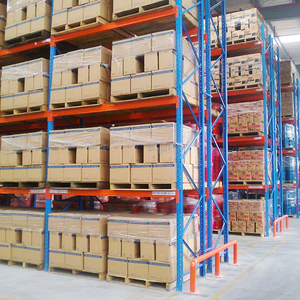
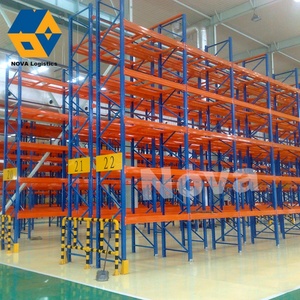
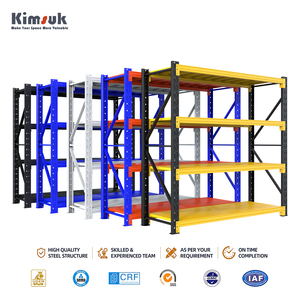
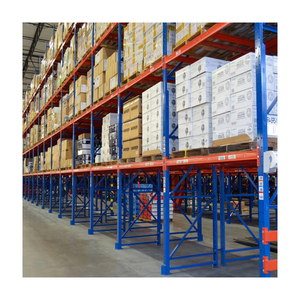
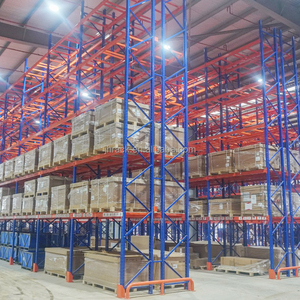
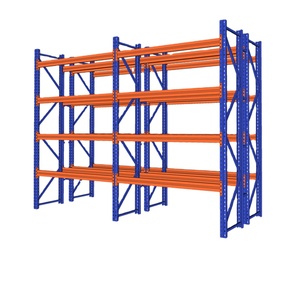
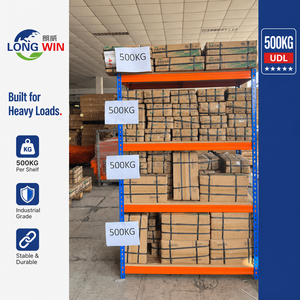
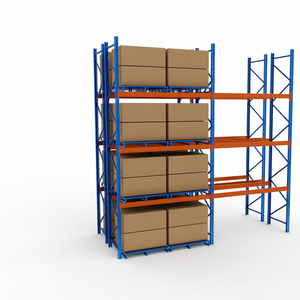
Navigating Extra Heavy Duty Pallet Racking in the London & UK Logistics Landscape
The Greater London warehouse real estate market is defined by unparalleled prime rental rates, tight footprints, and stringent structural compliance demands. With logistics operators strategically clustered along the M25 corridor, Park Royal, Thames Gateway, Heathrow, and Enfield, maximizing cubic meter storage density is no longer a luxury—it is an economic imperative. As premier extra heavy duty pallet racking manufacturers, SolidFort engineers advanced storage frameworks designed specifically to meet the high point-load capacities, vertical expansion requirements, and safety codes demanded by London's high-throughput supply chains.
Operating out of a state-of-the-art 30,000㎡ manufacturing plant, SolidFort combines cold-rolled Q355B structural steel processing, automated robotic welding, and thermosetting epoxy powder coating to produce racking systems capable of bearing pallet loads exceeding 3,500kg per beam level and frame capacities over 24,000kg. By adhering strictly to BS EN 15512:2020 (the European and British standard for adjustable pallet racking structural design) alongside SEMA (Storage Equipment Manufacturers' Association) directives, FEM 10.2.02, and ANSI/RMI MH16.1 specifications, we supply factory-direct infrastructure engineered for audit-ready compliance across the UK.
Engineering Superiority: Why Structural Specs Matter
A granular look at the materials, tolerances, and design mechanics behind our heavy-duty racking.
High-Tensile Q355B Cold-Rolled Steel
We utilize certified structural grade Q355B steel exhibiting yield strengths up to 355 MPa, delivering 30% higher load resilience compared to standard Q235 steel profiles used by generic manufacturers.
BS EN 15512 Deflection Limits
Our box and step beams are mathematically calculated to limit elastic deflection under full uniform load to less than L/200 (or L/300 for automated systems), preventing sagging and ensuring smooth forklift or shuttle operation.
Continuous Upright Roll Forming
Precision multi-stage roll forming ensures uninterrupted grain flow along column profiles. Featuring 50mm and 75mm pitch adjustments, columns are micro-punched for rapid, boltless beam lock engagement.
SolidFort Factory-Direct Production & Global Export Benchmarks
Direct supply chain control eliminates middleman markups, reducing capital expenditure for UK logistics buyers while providing full mill test certification (MTC) and LARC (Load Application and Rack Configuration) documentation.
Selecting the Optimal Extra Heavy Duty Racking Configuration
A comparative engineering guide to selecting heavy-duty racking systems based on SKU diversity, access speed, and footprint utilization in London facilities.
| Racking System Type | Max Load Capacity per Level | Space Utilization Efficiency | Selectivity & Access | Ideal London Warehouse Application |
|---|---|---|---|---|
| Selective Heavy-Duty Racking | 1,000kg – 4,500kg | 60% – 65% | 100% Direct Access | Park Royal E-commerce hubs, high-SKU distribution, third-party logistics (3PL). |
| Drive-In / Drive-Thru Racking | 1,500kg – 2,000kg / pallet | 80% – 85% | LIFO / FIFO Bulk Access | Cold storage facilities in Thames Gateway, high-density bulk beverage storage. |
| Radio Shuttle Automated Racking | 1,500kg – 2,500kg / pallet | 85% – 90% | Semi-Automated FIFO/LIFO | Multi-tier deep storage near M25 corridors minimizing labor and forklift travel. |
| Heavy-Duty Cantilever Racking | 500kg – 3,000kg / arm | 70% – 75% | 100% Open Access | Construction material depots, timber yards, structural steel pipe storage in Barking/Enfield. |
| Push-Back Rack Systems | 1,000kg – 2,000kg / pallet | 75% – 80% | LIFO (2 to 6 Pallets Deep) | Medium turnover inventory, food distribution centers with limited floor area. |
Localized Application Scenarios & Supply Chain Trends in Greater London
The industrial landscape in London has underwent rapid transformation over recent years. Driven by the expansion of same-day e-commerce delivery networks, stringent local council environmental policies, and urban space consolidation, warehouse operators must engineer their facilities for maximum longevity and load safety.
1. High-Bay Vertical Expansion in Space-Constrained Urban Hubs
With warehouse space commanding top-tier rental prices per square foot in locations such as Heathrow Logistics Park and Park Royal, expanding horizontally is frequently impossible. SolidFort works with London engineering teams to deploy high-bay extra heavy duty racking systems reaching heights of up to 15 meters. Utilizing custom-engineered heavy duty frame bracing and expanded heavy baseplates, our designs distribute immense point loads across concrete slabs without compromising structural integrity or breaching UK building settlement limits.
2. ULEZ & Last-Mile Logistics Optimization
London's Ultra Low Emission Zone (ULEZ) regulations have forced logistics providers to optimize fleet utilization. Heavy duty racking systems must accommodate varied pallet formats—including standard UK 1200mm x 1000mm pallets, Euro pallets (1200mm x 800mm), and non-standard heavy equipment skids. Our step beam profiles equipped with drop-in galvanized wire mesh decking or heavy-duty pallet support bars allow rapid transshipment of diverse goods without risk of pallet deflection or structural failure.
3. Integration with Semi-Automated Warehousing (Radio Shuttle Systems)
As labor costs rise across the South East, automated and semi-automated storage technologies are rapidly replacing manual forklift racking. SolidFort’s extra heavy duty radio shuttle racking systems feature precision-engineered guide rails integrated into heavy structural frames. The automated shuttle cart glides inside deep racking channels to store and retrieve heavy pallets up to 2,000kg, reducing aisle requirements, eliminating forklift impact damage, and dramatically boosting throughput speeds.
4. Compliance with SEMA Inspections & UK Building Safety Regulations
Under the Health and Safety at Work etc. Act 1974 and the Provision and Use of Work Equipment Regulations 1992 (PUWER), UK warehouse operators are legally bound to ensure their storage systems undergo regular inspection and maintain safety plaques. SolidFort structural racking is manufactured to full SEMA guidelines, featuring heavy duty column guards, corner protectors, safety locking pins, and clear LARC load signs. This ensures London facilities pass SEMA annual rack inspections with zero compliance penalties.
The SolidFort Enterprise Advantage
Why procurement teams, structural engineers, and logistics consultants across the UK partner with SolidFort.
Free Technical CAD & Floor Layouts
We provide full structural engineering support, including 2D/3D CAD layouts, seismic point-load calculations, and forklift aisle radius optimization within 24–48 hours of consultation.
ISO 9001 & CE Certified Quality
Every frame, beam, and connector undergo rigorous raw material sampling, ultrasonic weld inspection, and thickness monitoring to guarantee compliance with global structural safety codes.
Door-to-Door (DDP) Shipping to UK
We manage complete export freight logistics—including container stuffing, ocean transit to Felixstowe or London Gateway, UK customs clearance, and timed flatbed truck delivery to your site.
Frequently Asked Questions by London Racking Buyers
Direct answers from our structural engineering team addressing local procurement, building codes, and structural calculations.
In the UK and London market, adjustable pallet racking must comply with BS EN 15512:2020 for structural design calculations and align with SEMA (Storage Equipment Manufacturers' Association) Codes of Practice. Additionally, installations must adhere to the Construction (Design and Management) Regulations 2015 (CDM 2015). SolidFort racking is designed to these exact standards, providing comprehensive structural calculation reports for site inspections.
Upright frame loads create intense concentrated point loads on concrete floors. Before installation, a structural engineer must review the slab's thickness, reinforcement mesh, and soil sub-base capacity (often critical in Thames estuary alluvial soils). SolidFort provides exact point-load figures for each column leg and can supply oversized heavy-duty baseplates (e.g., 200mm x 200mm x 10mm) to distribute loads safely across lower-rated slabs.
Yes. Under BS EN 15512 and SEMA standards, every racking column frame must be securely anchored to the concrete slab using certified M12 or M16 mechanical expansion floor anchors or chemical anchors. Anchoring prevents frame displacement caused by forklift impacts, maintains vertical plumbness, and ensures structural stability under maximum load conditions.
Our standard manufacturing lead time is 10 to 15 days at our Xiamen plant. Shipping via sea freight to UK ports (London Gateway, Felixstowe, or Southampton) typically takes 28 to 35 days. Including customs clearance and local haulage, total door-to-door delivery usually ranges between 6 to 7 weeks from final drawing sign-off.
Yes. We engineer customized pitch profiles, beam connectors, and column widths to integrate seamlessly with existing warehouse setups or specialized accessories. Send us your beam profile dimensions, frame depths, and teardrop or hook requirements, and our CAD team will engineer fully compatible matching components.
Ready to Engineer Your London Storage Facility?
Contact our structural design team today for free CAD layouts, BS EN 15512 compliance reviews, and competitive factory-direct pricing tailored to your facility.