High-Density Push Back Racking Systems
Explore factory-direct engineered pallet storage systems designed for optimum cubic space utilization and seamless material handling.
1. Technical Architectural Breakdown of Push Back Pallet Racking
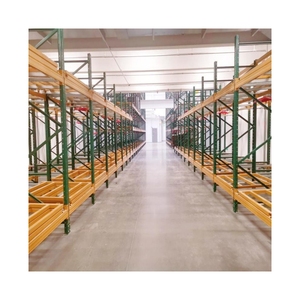
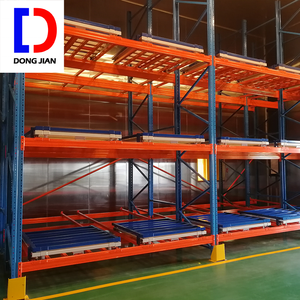
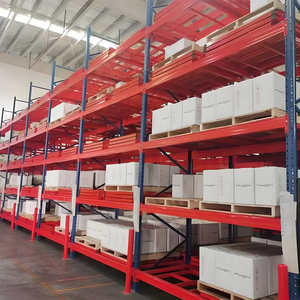
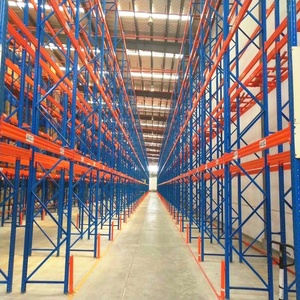
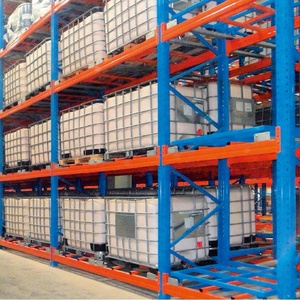
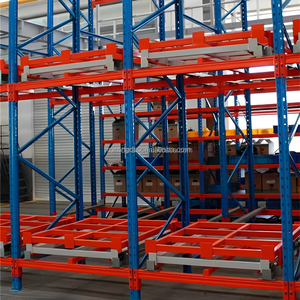
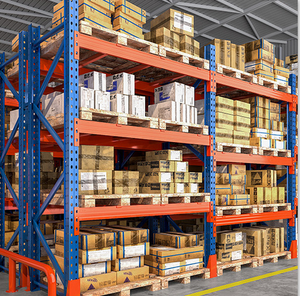
Push back pallet racking is a dynamic, high-density accumulator storage system engineered for medium to high-turnover inventory. Unlike standard selective racking—which requires multiple aisles for forklift access—push back racking utilizes nested, inclined cart systems riding on structural steel guide rails. This enables storage depths of 2 to 6 pallets deep per lane while operating on a Last-In, First-Out (LIFO) inventory cycle.
When loading a push back rack, the forklift operator places the first pallet onto the top nested cart. As the second pallet is introduced, the driver uses the pallet itself to push the first cart back into the system, exposing the second cart underneath. Upon unloading, gravity smoothly advances the remaining carts forward toward the aisle face, presenting the next pallet for immediate pick-up without requiring forklifts to physically enter the racking structure.
Information Gain Insight: Push back racking increases warehouse storage density by up to 75% compared to standard selective rack, while providing faster selectivity than drive-in racking because each lane operates independently with dedicated cart stacks.
Kinetic Slope Precision
Engineered with a precise 3/8-inch per foot rail gradient to balance effortless loading pressure against controlled gravity advancement during retrieval.
Low-Profile Cart Nesting
Heavy-gauge steel nested carts minimize vertical headroom loss, allowing max vertical clear space utilization under ceiling joists and sprinklers.
Anti-Binding Wheels
Flanged stainless steel or high-tensile steel wheels featuring sealed bearings prevent cart binding and absorb off-center pallet placements.
2. San Francisco & Bay Area Local Industrial Real Estate Matrix
The San Francisco Bay Area—encompassing the SF Peninsula, East Bay (Oakland, Hayward, Newark), and Silicon Valley (San Jose, Santa Clara)—represents one of the most cost-intensive industrial real estate markets in North America. Commercial warehouse lease rates in South San Francisco and near San Francisco International Airport (SFO) regularly top historic highs per square foot, creating immense pressure on supply chain managers to maximize volumetric cubic footprint rather than leasing additional horizontal space.
Furthermore, stringent municipal zoning, CALGreen sustainability mandates, and urban infill constraints make physical facility expansion economically unfeasible for most logistics operators. Implementing a high-density push back pallet racking configuration provides San Francisco enterprise buyers with immediate capacity scaling without undergoing expensive lease renegotiations or physical facility relocation.
Bay Area Micro-Fulfillment
Enables rapid order staging for last-mile urban logistics operating near SF downtown cores and tech campus hubs.
Cold Storage Density
Reduces thermal exchange volume in expensive Bay Area refrigerated facilities serving organic food suppliers and biotech labs.
Port of Oakland Logistics
Optimizes container strip-and-stuff operations for maritime importers requiring multi-pallet deep SKU holding bays.
High ROI per Sq. Ft.
Delivers asset payback periods often under 14 months by eliminating external 3PL overflow storage lease expenses.
3. California Seismic Compliance (CBC 2022 / RMI ANSI MH16.1)
Operating a high-density warehouse in San Francisco demands rigorous structural engineering adherence due to the proximity of the San Andreas and Hayward Fault Zones. Rack installations in the Bay Area fall under High Seismic Risk Categories (Seismic Design Category D, E, or F). Standard off-the-shelf pallet racking without site-specific seismic engineering poses extreme liability during ground acceleration events.
As a specialized factory-direct racking manufacturer, SolidFort engineers push back rack systems specifically designed to comply with the California Building Code (CBC 2022/2025 updates), RMI (Rack Manufacturers Institute) ANSI MH16.1 standards, and ASCE 7 seismic parameters. Every system undergoes site-specific finite element analysis (FEA) based on your facility's mapped Spectral Response Acceleration values ($S_{DS}$ and $S_{D1}$).
Heavy-Duty Anchor Embedment
Includes oversized, high-tensile seismic footplates engineered to accept 5/8" to 3/4" expansion anchors or epoxy bolts with deep slab embedment.
Dynamic Back-Stop Retainers
Integrated mechanical safety stops prevent cart derailment or accidental pallet displacement caused by vertical and lateral seismic forces.
Stamped Permit Engineering
Full support for San Francisco Department of Building Inspection (DBI) permit approval, including PE-stamped load application drawings (LARC).
4. Comparative Storage System Engineering Matrix
Selecting the optimal warehouse storage architecture requires balancing selectivity, density, labor throughput, and structural investment. Below is an engineering evaluation comparing Push Back Pallet Racking against traditional industrial alternatives:
| Storage System Type | Storage Density | Selectivity Rate | Forklift Operating Speed | SKU Flexibility | Seismic Stability (Bay Area) |
|---|---|---|---|---|---|
| Push Back Pallet Racking | Very High (Up to 75% increase) | Medium (50% direct lane access) | Fast (Forklifts remain in aisle) | High (Different SKU per lane) | Excellent (Nested carts prevent tipping) |
| Selective Pallet Racking | Baseline (100% aisles) | 100% (Instant access) | Fast | Maximum | Good (Requires standard anchoring) |
| Drive-In Racking | Maximum (80%+ density) | Low (Last-In, First-Out per bay) | Slow (Drivers enter rack) | Low (Same SKU per bay) | Moderate (High risk of column damage) |
| Radio Shuttle Racking | Maximum (Automated) | Low to Medium | Very Fast (Automated cart) | Medium | Superior (Heavy structure, anchored rails) |
5. SolidFort Manufacturing Capability & Enterprise Commitment
SolidFort Storage Equipment Co., Ltd. is a factory-direct pallet racking manufacturer operating a state-of-the-art 30,000㎡ production center in Xiamen, China. Built upon high-precision automated roll-forming lines, robotic welding stations, and an environmentally compliant powder-coating infrastructure, SolidFort delivers heavy-duty industrial rack systems directly to global procurement buyers, warehouse integrators, and general contractors in over 53 countries.
High-Grade Q235B & Q355B Steel
Manufactured strictly using cold-rolled prime structural steel for maximum yield strength, impact tolerance, and long-term durability under rating capacities.
Global Standards (AS4084, RMI, FEM)
Production process certified under ISO 9001 quality systems. Engineered to international standards with complete CE and structural test documentation.
Factory Direct Lead Time (10-15 Days)
In-house steel inventory enables 10–15 day manufacturing for standard configurations, complete with container-loading Optimization Plans.
6. San Francisco Buyer Frequently Asked Questions (FAQ)
Key technical answers for Northern California facility managers, logistics directors, and structural permit specifiers:
Optimize Your San Francisco Warehouse Footprint Today
Request a complimentary 3D CAD layout, seismic feasibility review, and factory-direct pricing quote from SolidFort's senior structural racking engineering team.
Send an Inquiry