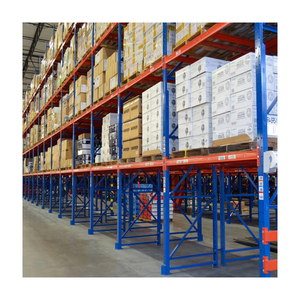
Wholesale Heavy Duty Storage Racks Selective Steel Pallet Rack
100% direct pallet selectivity engineered to AS4084 and FEM 10.2.02 standards for versatile SKU management.
100% direct pallet selectivity engineered to AS4084 and FEM 10.2.02 standards for versatile SKU management.
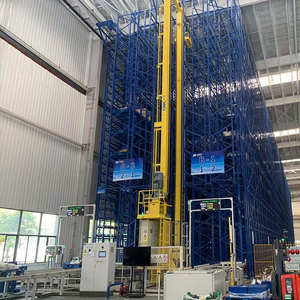
Automated high-bay stacker crane racking framework for high-throughput fulfillment centers.
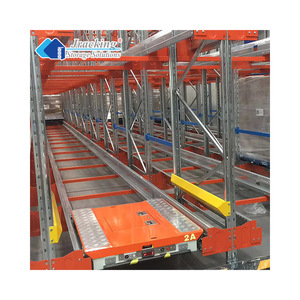
Semi-automated deep-lane pallet storage for high volume cold storage and FMCG operations.
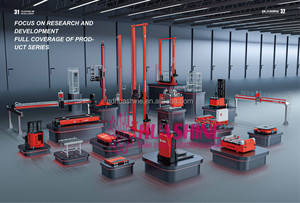
Precision-manufactured structural steel racks designed for seamless AGV and 4-way shuttle operation.
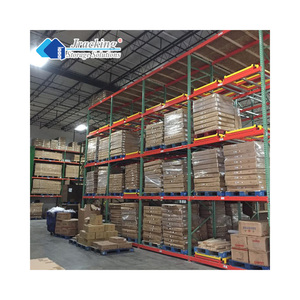
High-density LIFO nested cart system storing 2 to 6 pallets deep with gravity-assisted forward movement.
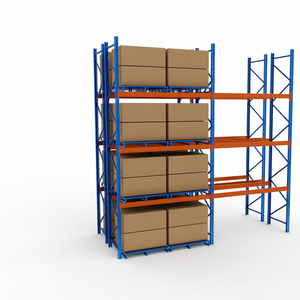
High-tensile Q235B/Q355B steel beam configuration for heavy unitized palletized industrial loads.
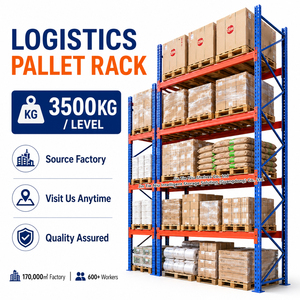
Reinforced column profiles and heavy-duty box beams customized for extreme warehouse payload requirements.
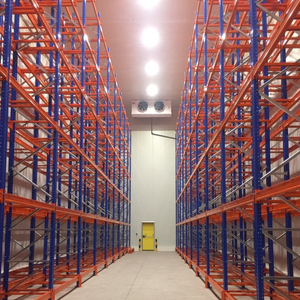
Dual-row back-to-back architecture increasing cubic footprint utilization while maintaining operational picking speed.
The Netherlands remains the undisputed logistical gateway to Mainland Europe, housing premier distribution hubs in the Port of Rotterdam, Schiphol Cargo City, Venlo-Venray, and Brabant (Tilburg/Waalwijk). However, acute warehouse real estate scarcity and escalating rental rates per square meter across Dutch prime logistics corridors demand aggressive spatial optimization. Warehouse operators, third-party logistics (3PL) providers, and cold storage facilities can no longer afford wide aisle configurations dedicated solely to standard selective pallet racking.
Push back racking systems represent a highly efficient dynamic storage technology engineered to maximize warehouse volumetric density while maintaining high SKU accessibility. Utilizing a series of nested rolling carts resting on inclined structural steel rails, push back systems enable Last-In, First-Out (LIFO) inventory rotation across depths ranging from 2 to 6 pallets deep. When searching for a reliable Push Back Racking System Supplier for the Netherlands, logistics directors must evaluate suppliers not only on structural steel prices, but on strict adherence to European standards such as NEN-EN 15512 (Static steel storage systems), safety factors, load wheel engineering, and local Benelux operational requirements.
Information Gain Summary: Unlike traditional Drive-In systems which expose rack columns to constant forklift impact, Push Back Racking keeps forklifts safely operating within the main aisle. Pallets are loaded onto telescoping nested carts; as a new pallet is pushed inward, it pushes existing pallets back along low-profile inclined tracks. Upon retrieval, gravity automatically moves back pallets forward to the picking face at a controlled speed.
A high-performance push back rack relies on flawless kinetic interaction between precision steel components, gravity dynamics, and structural upright stability. Unlike static pallet racking systems, dynamic push back racks experience cyclic mechanical stresses during every loading and unloading maneuver.
The core structural element consists of a set of nested steel carts sliding along inclined structural steel channels mounted at a fixed gradient (typically between 1.5° and 3.0°, depending on pallet dimensions, surface friction, and total design load). In a 4-deep configuration, three nested carts sit atop the steel rail track:
When the forklift operator removes Pallet D from the front picking position, Cart 3 automatically rolls forward under gravity, presenting Pallet C at the front aisle picking position. Heavy-duty stainless steel ball-bearing wheels with hardened polyurethane outer rims ensure quiet operation, minimal rolling resistance, and a lifetime operating lifespan without operational track binding.
Achieve up to 75% higher pallet capacity compared to selective racking by eliminating intermediate aisles and utilizing full vertical building height.
Forklifts never enter the racking matrix. This reduces upright collisions by over 90% compared to traditional Drive-In rack configurations.
LIFO handling by lane allows operators to push and pick faster than drive-in racking, accelerating truck turnover at loading bays.
The Netherlands logistics landscape has unique operational demands governed by high land acquisition costs, stringent occupational safety laws (Arbowet), and specialized industry sectors such as fresh produce, floral logistics, chemical logistics (PGS 15 compliance), and cold storage.
In regions such as Westland, Venlo, and Zeeland, cold storage warehouses operate at temperatures from freezing down to -25°C. Refrigerated and frozen volume cubic space is extremely expensive to cool. Implementing push back racking allows facility operators to achieve ultra-high pallet density without the high investment and maintenance costs of fully automated dynamic mobile shuttles or motorized mobile racking. The mechanical nested cart design operates reliably in sub-zero conditions without electrical components, battery freezing risks, or hydraulic fluid degradation.
Dutch warehouse operations predominantly handle two standard pallet dimensions: Euro Pallets (EPAL 1: 800 mm × 1200 mm) and Industrial/Block Pallets (EPAL 3 / CHEP: 1000 mm × 1200 mm). Push back systems supplied to the Netherlands must feature custom-engineered cart footprints capable of supporting both bottom-runner orientations safely:
Importing industrial racking into the Netherlands requires strict compliance with European structural design protocols. SolidFort manufactures racking systems conforming to NEN-EN 15512 (Static steel storage systems - Specification of beam-column connections), NEN-EN 15620 (Tolerances, deformations and clearances), and NEN-EN 15635 (Application and maintenance of storage equipment). Every installation must pass Dutch safety inspections with clear load warning plaques (LARC plates) mounted prominently at every aisle entrance.
As the European logistics sector navigates economic shifts and sustainability mandates, several macro trends are accelerating demand for advanced push back racking solutions across the Benelux region:
The Dutch government and major real estate developers (such as Prologis, CTP, and Goodman) prioritize BREEAM "Excellent" and "Outstanding" ratings for modern distribution centers. SolidFort supports circular economy and green building goals by utilizing high-strength recyclable Q235B/Q355B cold-rolled steel, energy-efficient automated roll-forming lines, and zero-VOC eco-friendly epoxy-polyester powder coatings that comply with EU REACH environmental regulations.
Rather than replacing human workers entirely with capital-intensive ASRS systems, many Dutch warehouse managers are adopting a **hybrid automation model**. High-density push back rack blocks handle bulk reserve storage, while Autonomous Mobile Robots (AMRs) or Guided Reach Trucks handle horizontal transport between receiving bays and picking lanes. This minimizes capital payback periods to under 24 months while providing rapid scalability during peak seasonal surges.
Selecting the optimal warehouse racking system requires balancing selectivity, floor footprint efficiency, operational throughput, and capital investment. The table below outlines how Push Back Racking compares directly against alternative industrial storage configurations commonly deployed across European warehouses:
| Storage System Type | Pallet Selectivity | Volumetric Efficiency | Forklift Impact Risk | Cold Storage Suitability | Estimated Cost / Pallet Slot |
|---|---|---|---|---|---|
| Push Back Racking (2-6 Deep) | Medium (LIFO by Lane) | Very High (75-80%) | Very Low (Aisle Only) | Excellent (Pure Kinetic) | €100 – €220 |
| Selective Pallet Racking | 100% Direct Access | Standard (40-45%) | Moderate | Low Space Efficiency | €50 – €95 |
| Drive-In / Drive-Thru Racking | Low (LIFO by Block) | High (70-85%) | High (Enters Racking) | Moderate | €90 – €160 |
| Radio Shuttle Racking | Medium (FIFO/LIFO) | Maximum (85-90%) | Very Low | Requires Heated Battery | €180 – €350+ |
SolidFort Storage Equipment Co., Ltd. is a factory-direct racking manufacturer operating a state-of-the-art 30,000㎡ production facility in Tongan District, Xiamen, China. Operating since 2016, SolidFort has established an international reputation for structural engineering excellence, supplying distribution projects across 53+ countries.
Every Push Back Racking system supplied to Dutch logistics buyers undergoes rigorous factory testing prior to container dispatch:
SolidFort eliminates middleman markups by dealing factory-direct with European logistics managers and racking distributors. We provide comprehensive CAD drawings, structural calculation notes, 3D structural renderings, and customized container loading plans (FOB, CIF, or DDP terms). Standard production lead times are maintained within 10 to 15 days, ensuring rapid project completion for time-critical warehouse expansions.
SolidFort push back carts are engineered to accommodate standard load profiles ranging from 500 kg up to 1,500 kg per pallet position. Custom reinforced cart frameworks can be engineered for special heavy point load applications up to 2,000 kg per slot upon technical request.
Yes. All racking profiles, beam-to-column connectors, and cart assemblies supplied by SolidFort are engineered in strict reference to European standards NEN-EN 15512, FEM 10.2.02, and RMI (ANSI MH16.1) guidelines. Complete structural design calculations and load plaques are supplied with every order.
Yes. SolidFort manufactures multi-pallet cart designs specifically customized for the Benelux market. The nested carts feature dual-support cross members capable of securely supporting 800×1200 mm Euro pallets and 1000×1200 mm Industrial Block pallets without pallet deflection or safety risks.
Because push back rails feature a low-profile inclined slope (approximately 1.5° to 3°), system vertical height accumulates gradually per deep position. Generally, a facility clear ceiling height of 6.0 meters to 12.0 meters allows for multi-tier push back structures yielding 3 to 5 vertical beam levels.
Push back racking is ideal for cold storage environments down to -25°C. Since the system is purely kinetic (driven by gravity and precision stainless steel sealed bearing wheels), there are no electrical motors, sensors, or hydraulic fluids that fail in extreme cold conditions.
Standard order manufacturing takes 10 to 15 days at our Xiamen plant. Ocean freight transit from Xiamen Port directly to the Port of Rotterdam or Port of Amsterdam typically requires 28 to 35 transit days. Complete DDP (Delivered Duty Paid) door-to-door delivery logistics services are available.
Yes. SolidFort provides high-tensile mechanical wedge anchors or chemical anchor bolts tailored to your warehouse slab thickness and concrete strength class (e.g., C20/25 or C30/37). Heavy-duty steel upright protectors and row end guards are supplied to meet Dutch workplace safety (Arbowet) requirements.
Planning a warehouse upgrade or high-density expansion project in the Netherlands? Contact SolidFort's structural engineering team today for free space layout drawings, structural calculations, and competitive factory-direct pricing.