Technical White Paper: Engineering Static Pallet Racking for the Peruvian Market
The rapid expansion of Peru’s logistics ecosystem—anchored by the critical trade gateways of Puerto del Callao and the newly developed Megapuerto de Chancay—has catalyzed an unprecedented demand for structural steel storage infrastructure. As Peruvian third-party logistics (3PL) providers, agricultural exporters in Ica and Piura, mining supply chain operators in Arequipa, and commercial retail distributors in Greater Lima scale up, selecting a verified, direct-source Static Pallet Racking Factory & Exporter becomes a vital strategic decision.
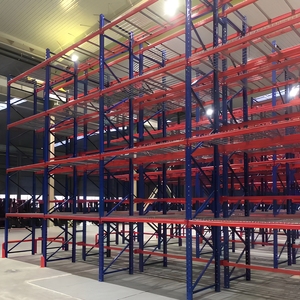
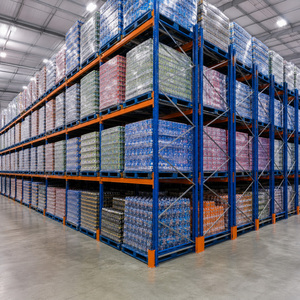
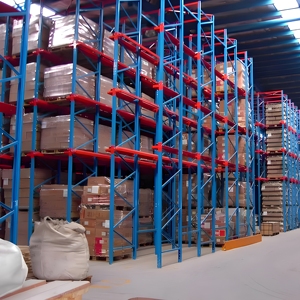
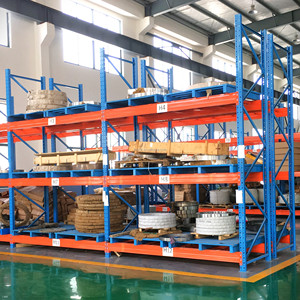
Static pallet racking systems—primarily comprising Selective Pallet Racking, Drive-In Storage Systems, Double-Deep Racks, and High-Load Cantilever Structures—represent the structural backbone of high-cube industrial warehouses. However, exporting heavy-duty structural steel racking to Peru requires rigorous adherence to local geographical, climatic, and regulatory realities. Static racking imported into South America’s Pacific coast must be precision-engineered to withstand severe seismic forces, extreme coastal atmospheric salinity, and variable altitude load tolerances.
1. Seismic Structural Engineering: Complying with Peruvian Standard NTP E.030
Peru is positioned directly along the highly active Pacific "Ring of Fire," categorizing major industrial corridors like Lima, Callao, Moquegua, and Trujillo within Seismic Zone 4 (the highest seismic hazard rating under Peru’s National Building Code - Reglamento Nacional de Edificaciones). In Zone 4, ground acceleration coefficients ($Z$) can reach up to 0.45g during a seismic event. Standard non-seismic static pallet racks engineered purely for gravity loads will experience structural buckling or cataclysmic frame collapse under lateral ground displacement.
As an authoritative Chinese manufacturing factory exporting to South America, our structural engineering team custom-calculates upright frame profiles in strict compliance with international standards including ANSI/RMI MH16.1, FEM 10.2.02, and AS4084, cross-referenced with Peruvian NTP E.030 (Diseño Sismorresistente) requirements:
Oversized Seismic Baseplates
Heavy-gauge cold-rolled steel baseplates with widened footprint areas distribute dynamic down-forces across concrete slabs, reducing concentrated shearing stress during earthquakes.
Heavy Concrete Anchor Bolts
Dual or quad M12/M16 wedge anchors per post deliver optimal embedment depth in C25/C30 concrete slabs to prevent pull-out under uplift loads.
Enhanced Structural Ductility
Utilizing high-tensile Q355B structural steel for upright columns ensures elastic memory and energy dissipation without catastrophic brittle fracture.
2. Environmental Adaptation: Anti-Corrosion Finishing for Coastal & Altitude Extreme
Peru presents unique geographic microclimates that directly impact structural steel longevity. The coastal province of Callao and the industrial parks of Lurín and Villa El Salvador endure relative humidity exceeding 85% to 95% year-round, combined with aggressive airborne marine salts ("garúa"). Conversely, high-altitude mining distribution centers in the Andes (e.g., Cerro de Pasco, Cajamarca, Arequipa at 3,000–4,500 meters above sea level) present extreme ambient temperature swings and dry atmospheric conditions.
To guarantee decades of operational safety without rust degradation, SolidFort applies advanced surface treatments tailored to the specified installation environment:
- Thermally Cured Electrostatic Epoxy-Polyester Powder Coating: Applied at 80–100 microns thickness following a 7-stage automated chemical pre-treatment and iron phosphate wash. Ideal for indoor dry warehouses and general distribution logistics.
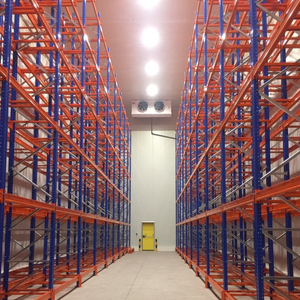
- Hot-Dip Galvanization (HDG to ISO 1461): Immersion of structural components in molten zinc creates a metallurgical bond with a zinc layer exceeding 65–85 microns. Essential for coastal seafood cold storage rooms (operating at -25°C in Paita or Chimbote) and high-humidity agricultural packaging facilities.
3. Technical Comparison Matrix: Static Pallet Racking Systems
Selecting the optimal racking typology requires balancing storage density against SKU selectivity. Below is an engineering overview comparing the most widely deployed static pallet rack configurations in Peruvian industrial facilities:
| Racking System Type | Pallet Access (Selectivity) | Space Utilization | Typical Load Capacity | Primary Peruvian Industry Application |
|---|---|---|---|---|
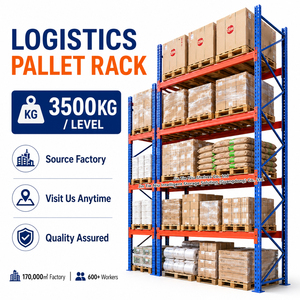
| Selective Pallet Racking | 100% Immediate Access | 35% - 40% Floor Area | 1,000 kg – 4,500 kg / level | FMCG Distribution, Retail (Supermercados), 3PL Logistics |
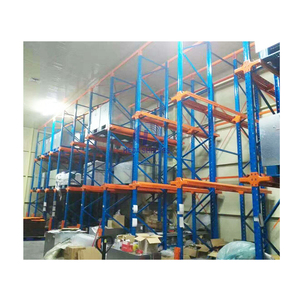
| Drive-In / Drive-Thru Racking | Low (LIFO / FIFO) | 75% - 85% Floor Area | 1,000 kg – 1,800 kg / pallet | Agro-export Cold Rooms (Grape, Avocado, Mango), Frozen Seafood |
| Double-Deep Pallet Racking | 50% Immediate Access | 55% - 65% Floor Area | 1,500 kg – 3,000 kg / level | Pharmaceuticals, Industrial Parts Storage in Lurín & Huachipa |
| Heavy Duty Cantilever Racking | 100% Selective (Long Goods) | Variable Open Grid | 500 kg – 3,000 kg / arm | Mining Drill Rods, Structural Steel Pipes, Timber & Building Materials |
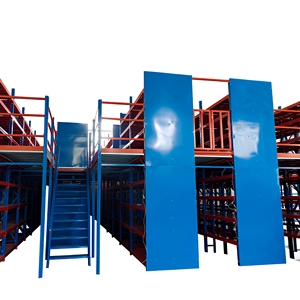
| Mezzanine Platform Racking | Multi-Level Manual Access | 200% - 300% Cubic Gain | 300 kg – 1,000 kg / m² | E-Commerce Fulfillment Hubs, Automotive Spare Parts |